Featured

Arriving in Colombia

Morning mist at the country house

Hola familia y amigos!

Welcome to our first blog post! Bear with us, we are new to this blogging thing…

We arrived safe and sound on Jan 21st and enjoyed a quiet start to the trip in Juli’s family’s country house on the outskirts of Medellin, near a town called Guarne, Antioquia. This is up in the hills, an altitude of 2,400m, and is surrounded by beautiful country-side. It benefits from a complete lack of noise from traffic or planes so was the perfect setting for us to get over our jet lag. Juli was reunited with lots of family and friends, and of course her adorable black Labrador who officially is called Tomate (ie Tomato), but to his friends is known as Negro, on account of his fur (see pic). During the week we did a couple of walks, one of which was to a very cold river, and also we took a bus to a nearby ‘GoApe’ experience with Juli’s big brother Camilo, which was great fun. The week culminated in a big family gathering in which ‘sancocho’ was served, a delicious traditional stew of potato, plantain, beef and chicken, plus lots of veggies picked from the vegetable patch, cooked over an open fire. It took the whole morning to cook and was a fitting way to mark a full 14 months since Juli had been home! From my perspective the day provided the chance to practice my Spanish, which being very limited, meant I experienced a number of somewhat awkward interactions in which warm pleasantries (I think) were met with bewildered silence – apologies to all (Lo siento!) Although lots of you know I am a bit afraid of dogs, the day’s social anxiety had the unexpected benefit of pushing me to make friends with Negro – the good thing with him is that he doesn’t speak Spanish either…

Sancocho

After the weekend we made our way into Medellin itself and have been staying with Juli’s childhood friend Paula, her mum Olga and her grandparents Hilmer and Alodia. Thank you to all for being so accommodating 🙂 We have met up with Juli’s father Josue for lunches and dinners as well, and he is of course very happy to see Juli again too! The city is at an altitude of 1,500m, so is much hotter and more humid than the country house. It sits in a valley in which the high rise apartment blocks are connected by a maze of very hilly roads, the traffic is pretty awful. It is known as ‘La Ciudad de la eterna primavera’, the city of eternal spring, as it has very little variation in seasons and is permanently between 25 – 32 degrees – a nice change from January in London. This means that the city is full of beautiful trees and plants – you can be driving down a main road and see mango and lime trees lining the route! A few days ago we unfortunately had to said goodbye to Camilo as he flew to Lisbon to be reunited with his wife Lenka, who is starting an internship at an institute studying genetics. Juli and her brother seem destined to never be in the same place at the same time, but it was great to spend time with him whilst he was here.

Juliana & Camilo
Juli, Josue (Dad), Camilo (Brother)

We have both been adjusting to life here and I have been taking quite intensive Spanish classes with a friend of Juli’s grandparents, Zoila, 3 or 4 times a week for two hours each. My brain feels exhausted after each class but I feel I am advancing quite quickly, which is key for me to feel more comfortable I think. Plus I am of course immersed in the Spanish language outside classes too – my conversations with Olga are slowly lengthening! Juli is catching up with her family and friends and taking a well earned break after the hustle of London.

Next blog post: our weekend trip to Santa Fe!

Armenia, the coffee growing region

CORONAVIRUS UPDATE: 74 days after the quarantine began in Colombia, Juli and I are STILL locked down in the country-house near Medellin… Despite the length of time, we are both well and staying positive, although of course sometimes we feel the boredom. In June Colombia is entering a different phase of the lockdown, so called ‘intelligent quarantine’, so we are hoping to have a little more flexibility to at least have one or two visitors, if going down to Medellin itself is not possible. We hope that July and August may see greater freedoms coming back, perhaps we might even be able to travel internally in Colombia. International flights at this point are banned until September 1st…what a year to go backpacking eh!? This is the last blog update from before the quarantine began, back when life was normal – who remembers that?

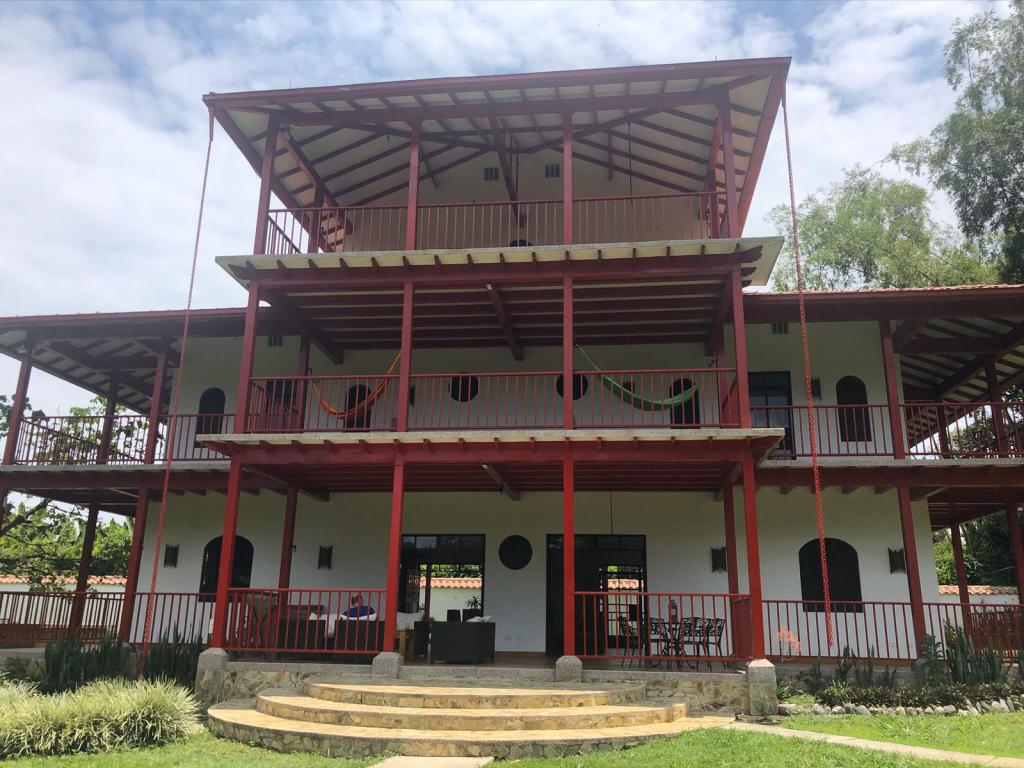
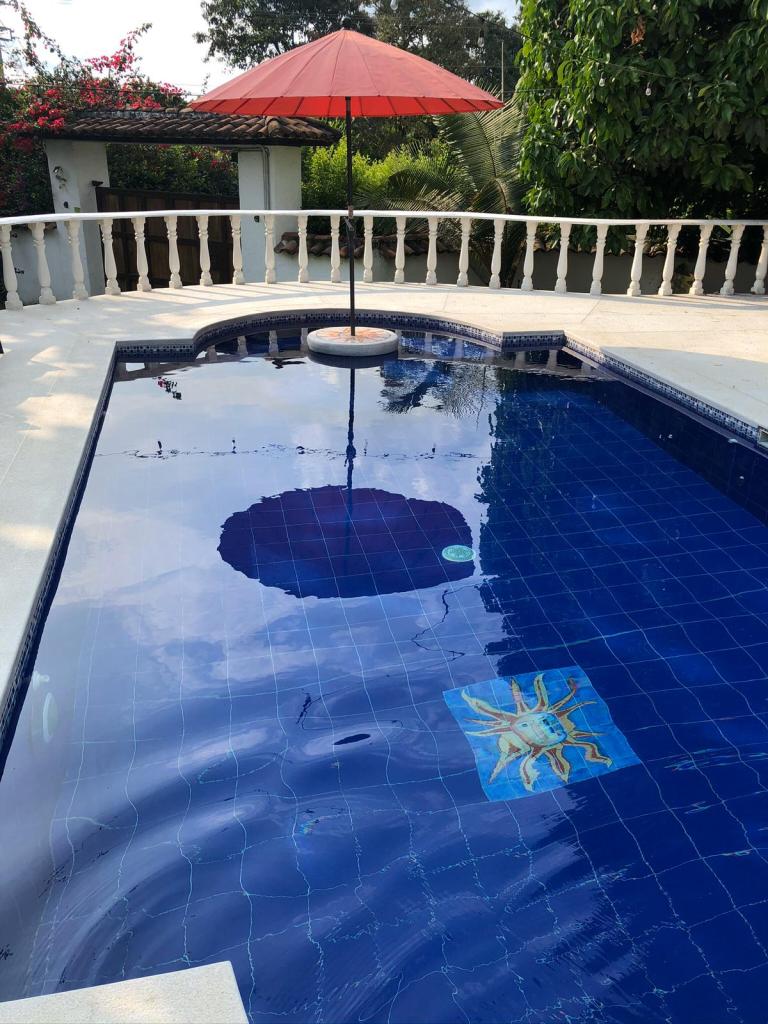
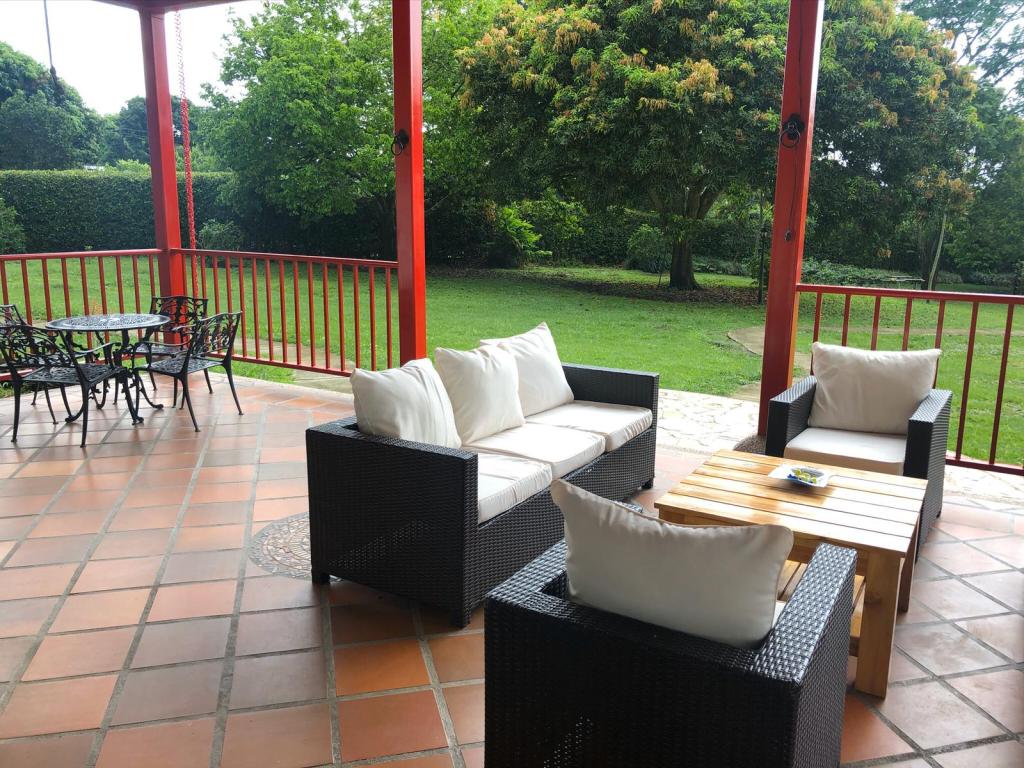
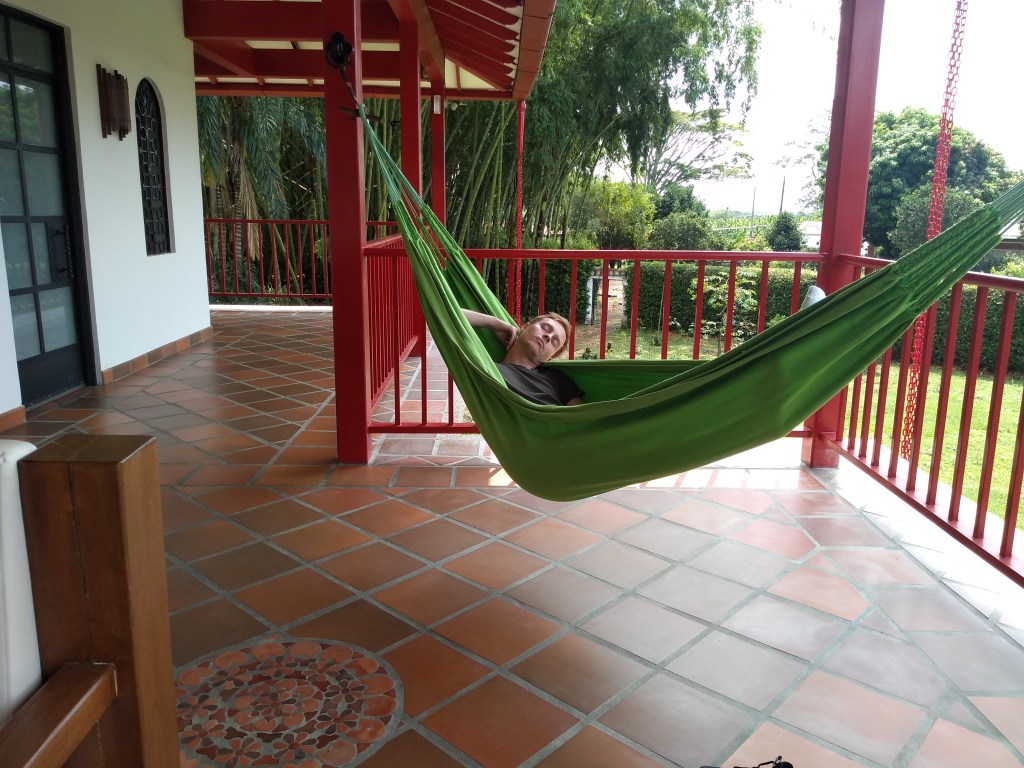
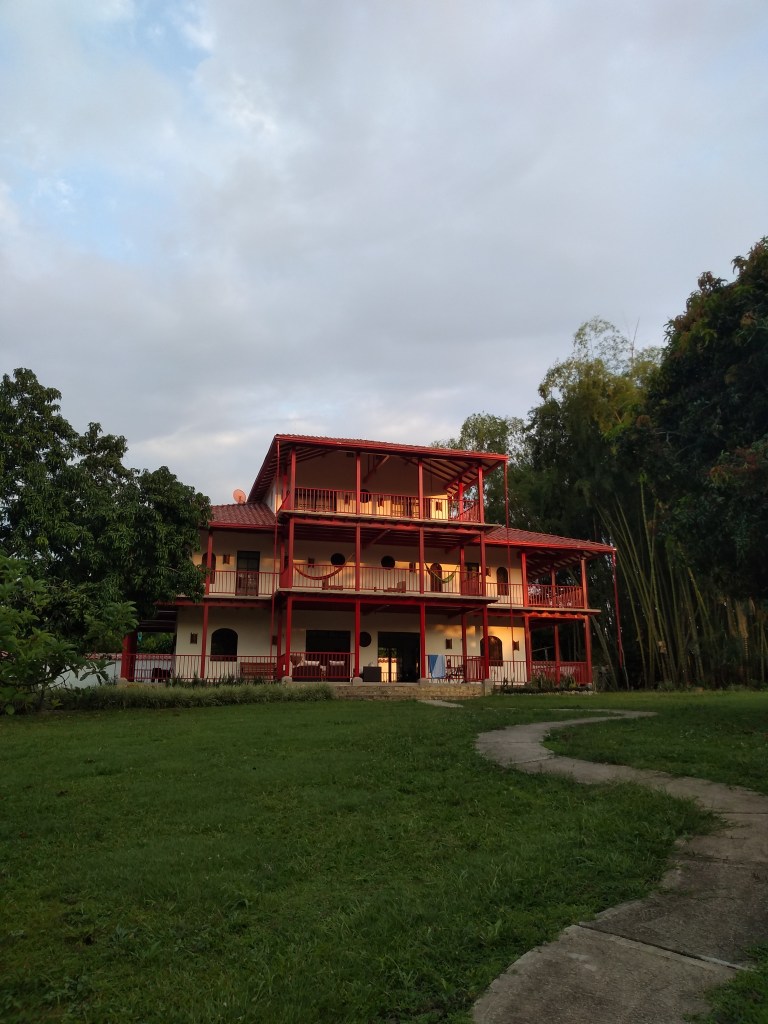
On February 25th we took a short flight from Medellin to Armenia, the coffee-growing region of Colombia. This is where lots of Juli’s family from her Dad’s side come from and we were staying at another country-house in a place called Pueblo Tapao, built by Juli’s uncle Jorge who lives in the US. This is a beautiful and enormous three-story palace with its own pool, suffice to say we were very excited to stay there! Charles and Joanna (Juli’s former boss and his wife) also flew down to stay there with us to continue their tour of Colombia, with Juli as tour guide!
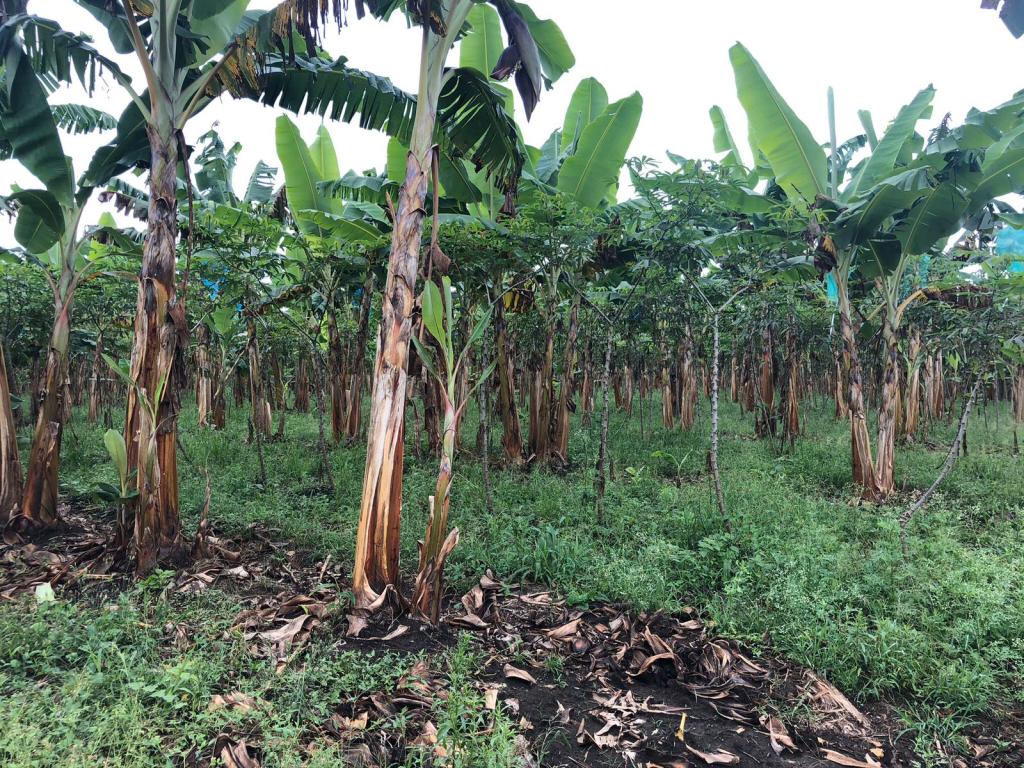
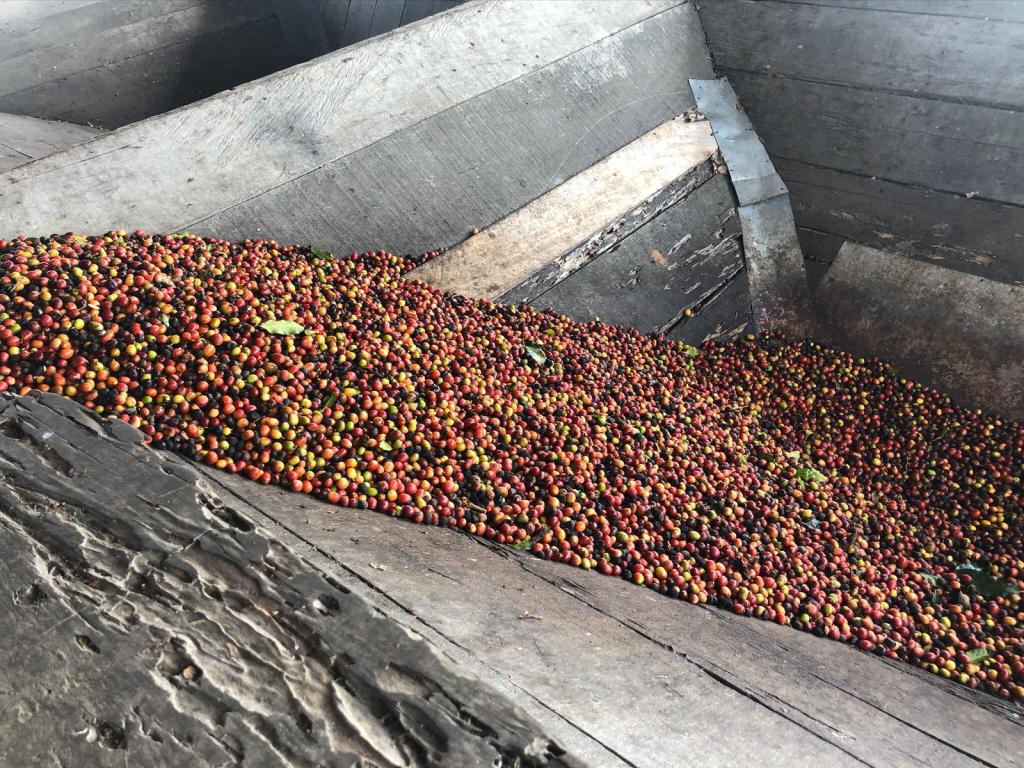
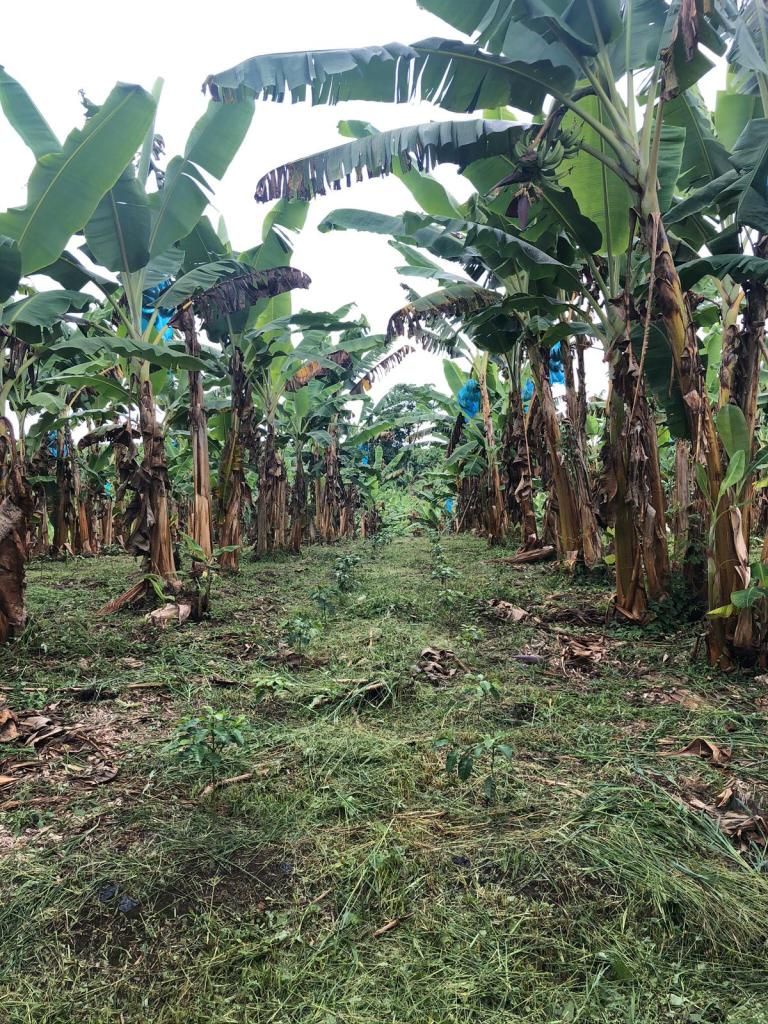
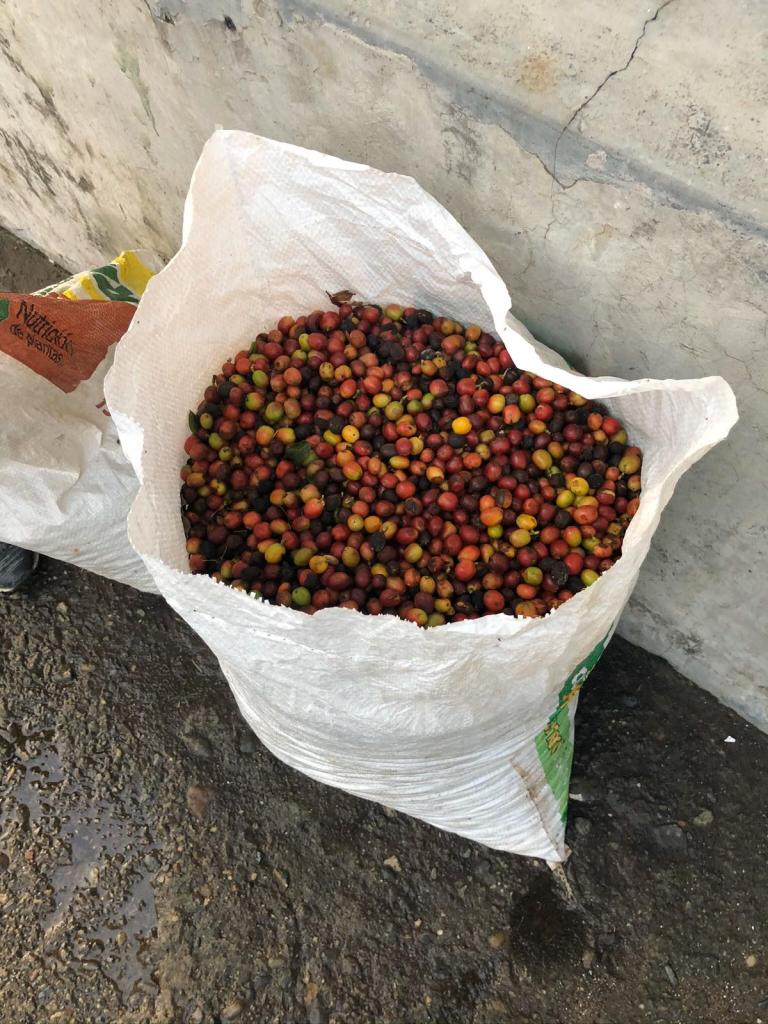
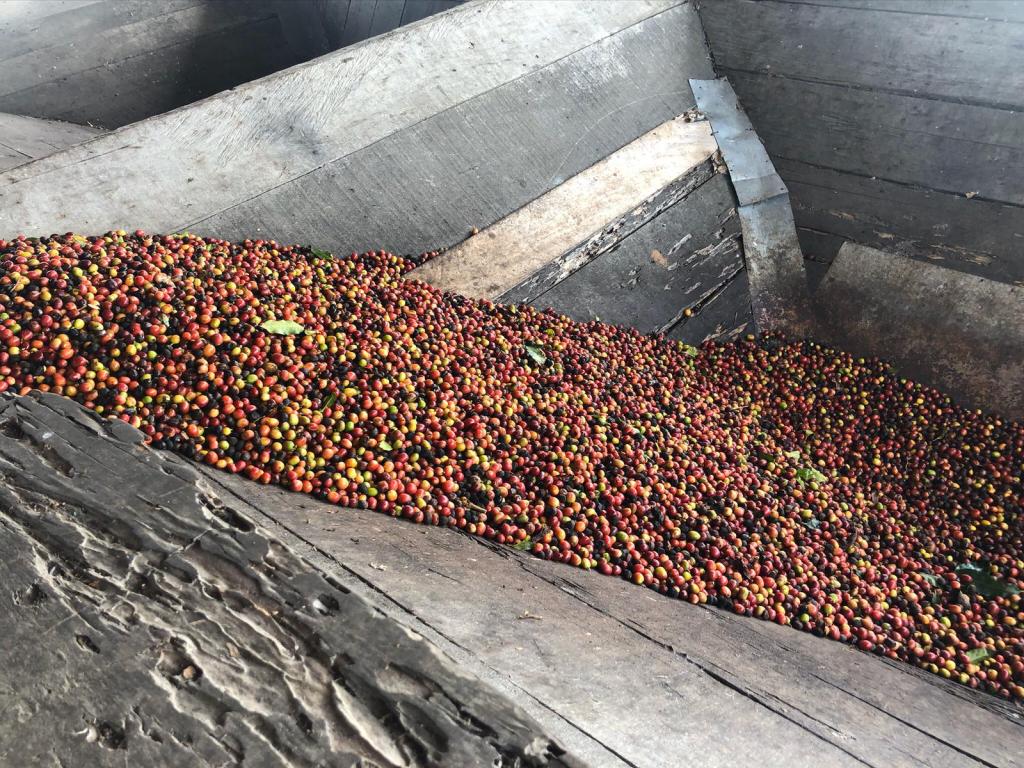
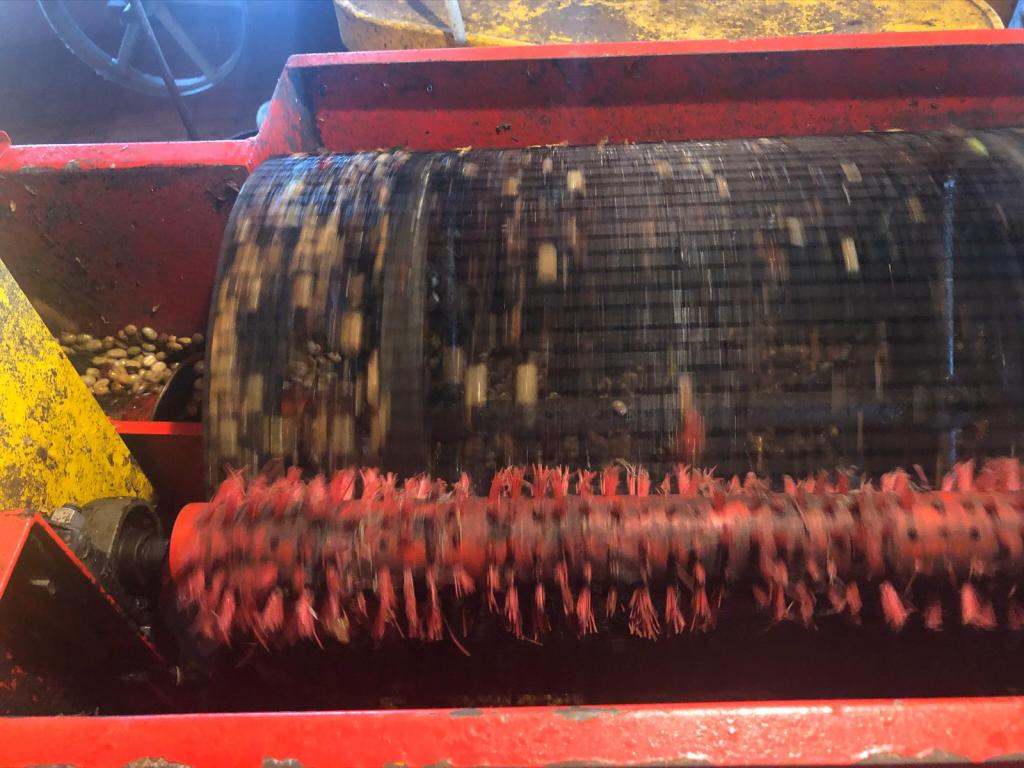
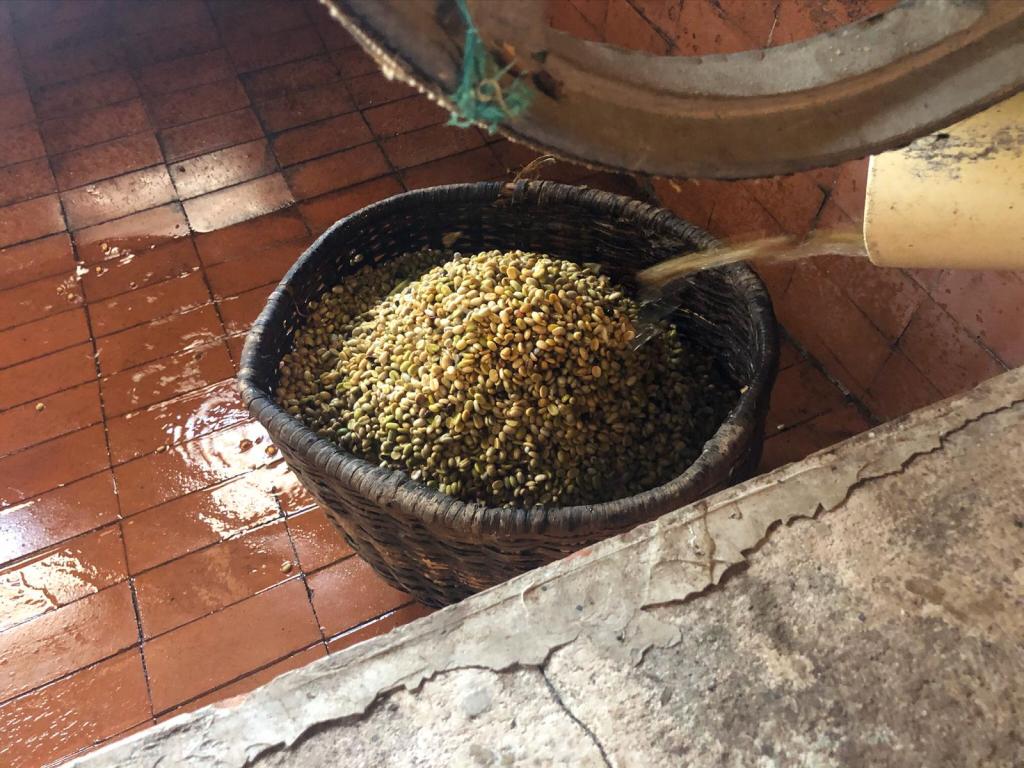
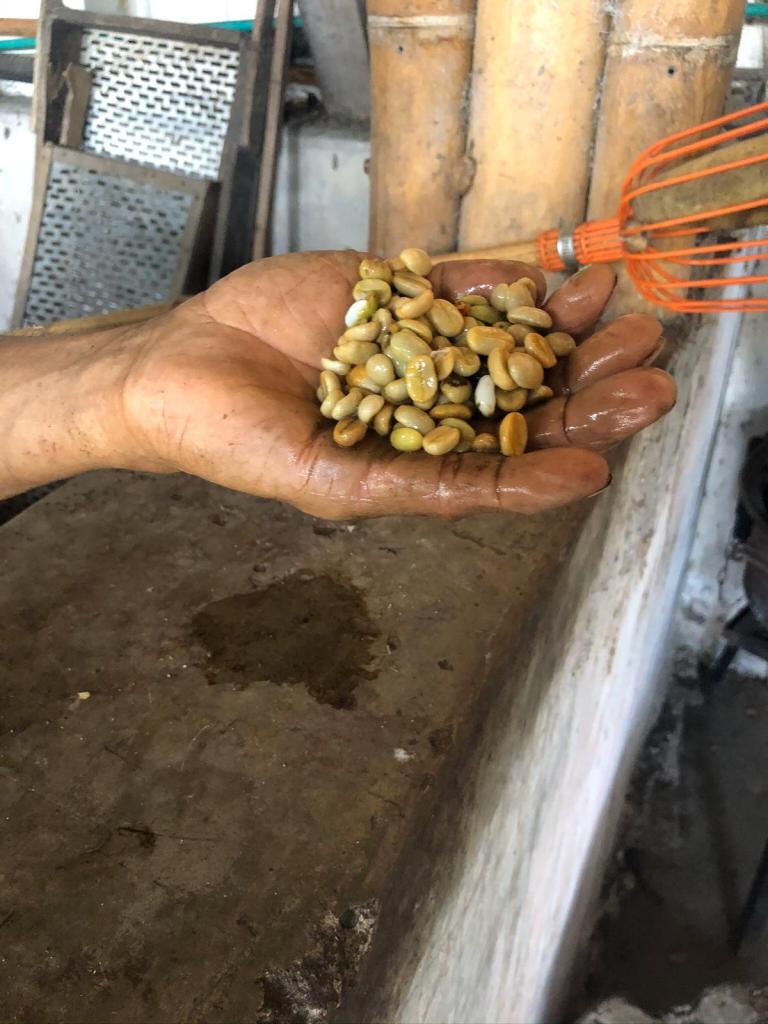
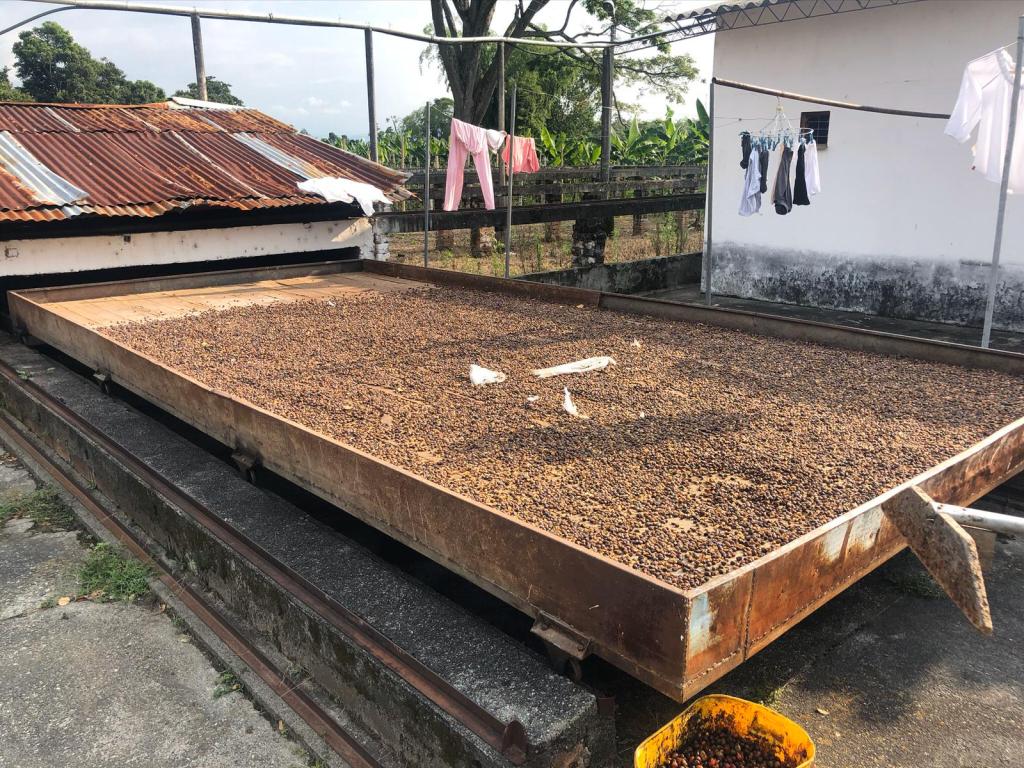
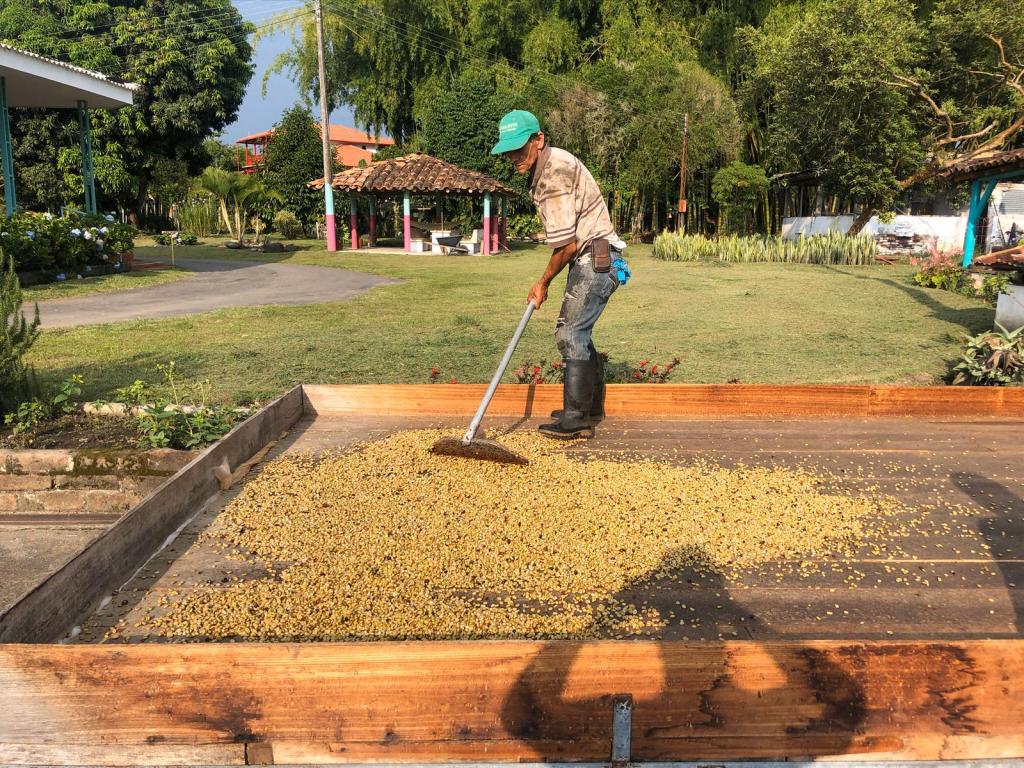
The country-house sits opposite another house where several other members of Juli’s family live, including Maria-Eunice, who collected us from the airport, and Maria-Eunice’s mother-in-law Adiela who is 96 years old! This house has a large piece of land which is a working farm, we wandered around the plantation looking at the rows of banana trees and coffee bushes. One of the days we were lucky enough to see how the coffee beans were processed in a rickety old building. An ancient machine sorted, de-husked and washed the beans, before shooting them out the other end. As the now golden-white beans were laid out in big drying racks we learned that the beans themselves would be exported, the husks would be made into poorer quality (we think instant) coffee and the damaged or over-ripe beans would stay in Colombia to become coffee for the domestic market. The high prices Europe and the US pay for South American coffee means all the good stuff is shipped abroad..! And I thought I was going to the source!

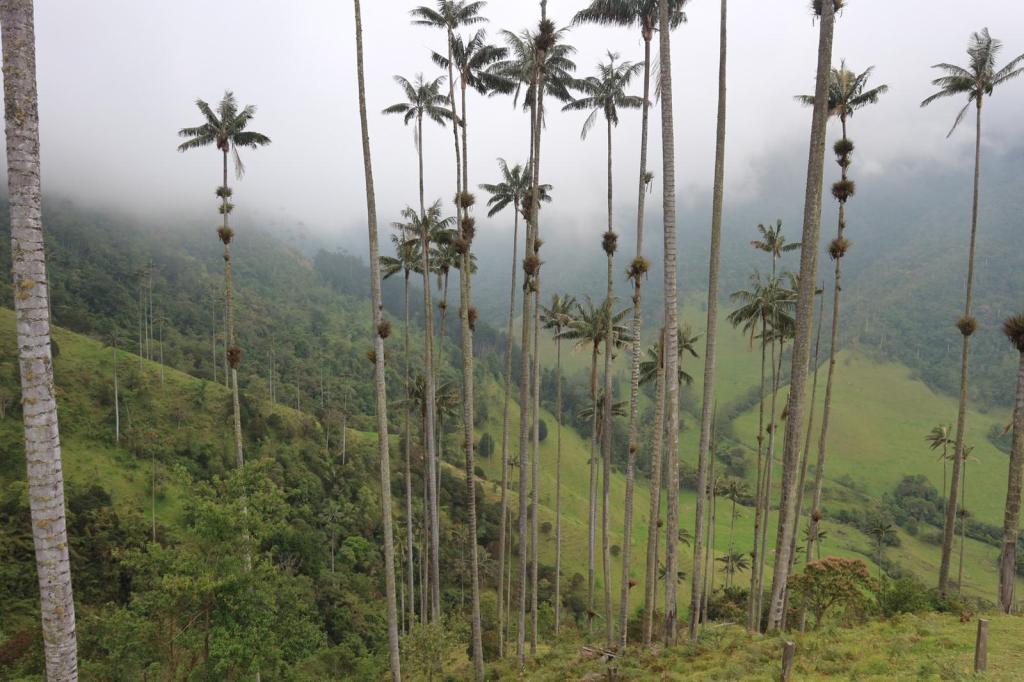
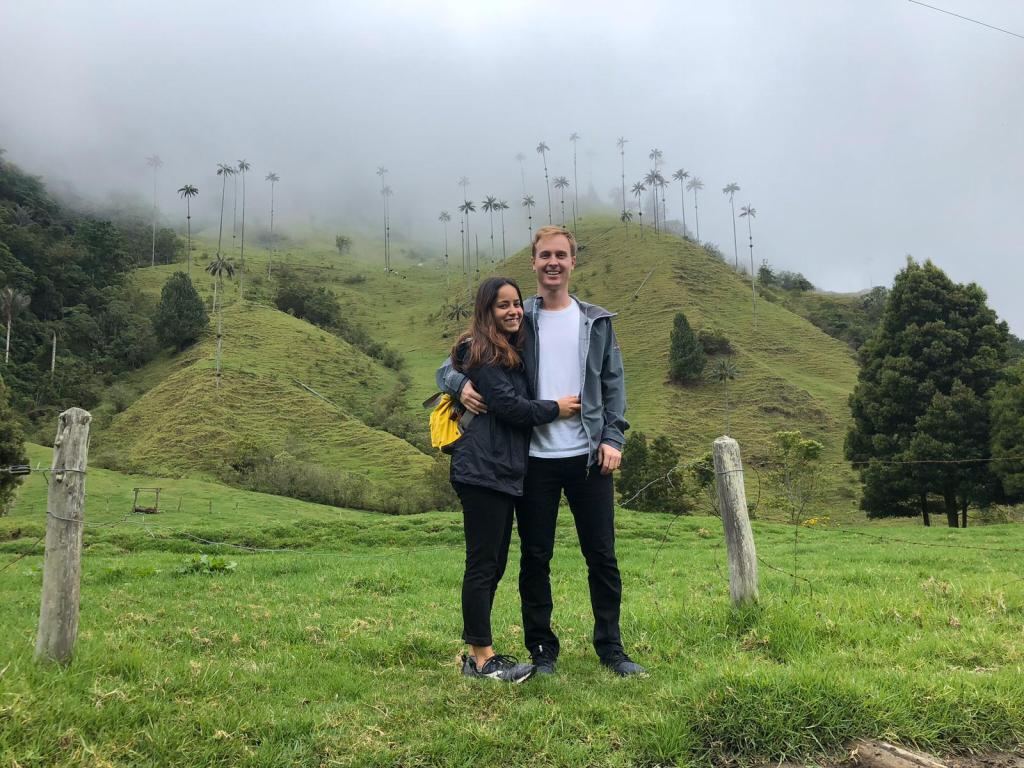
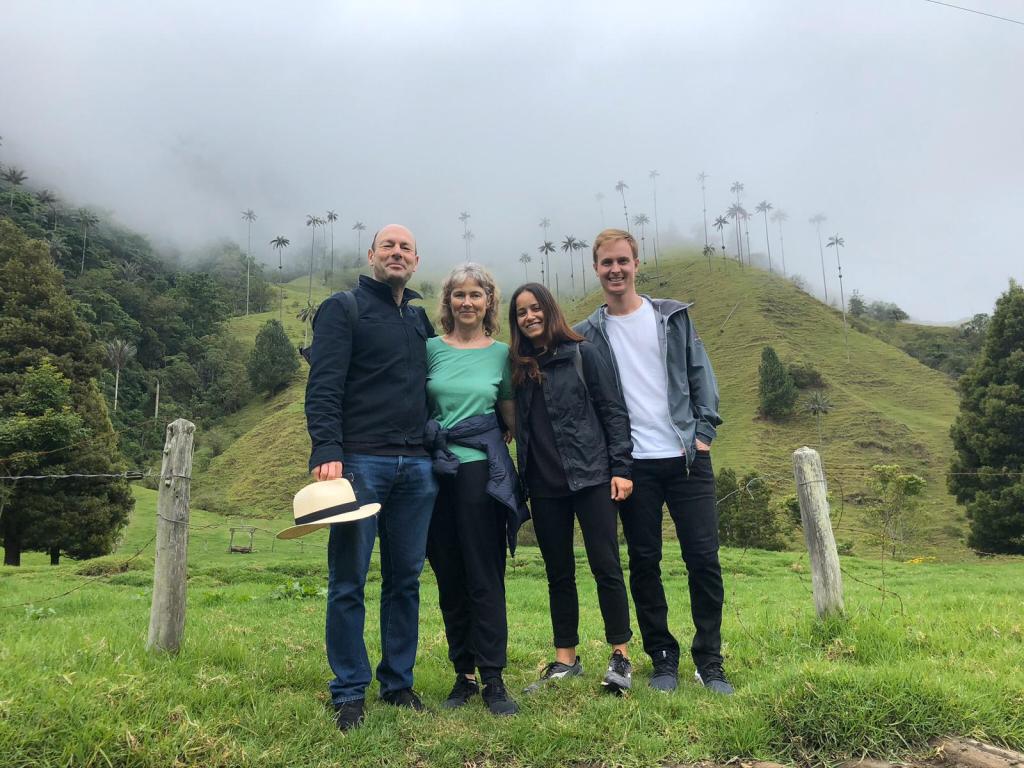
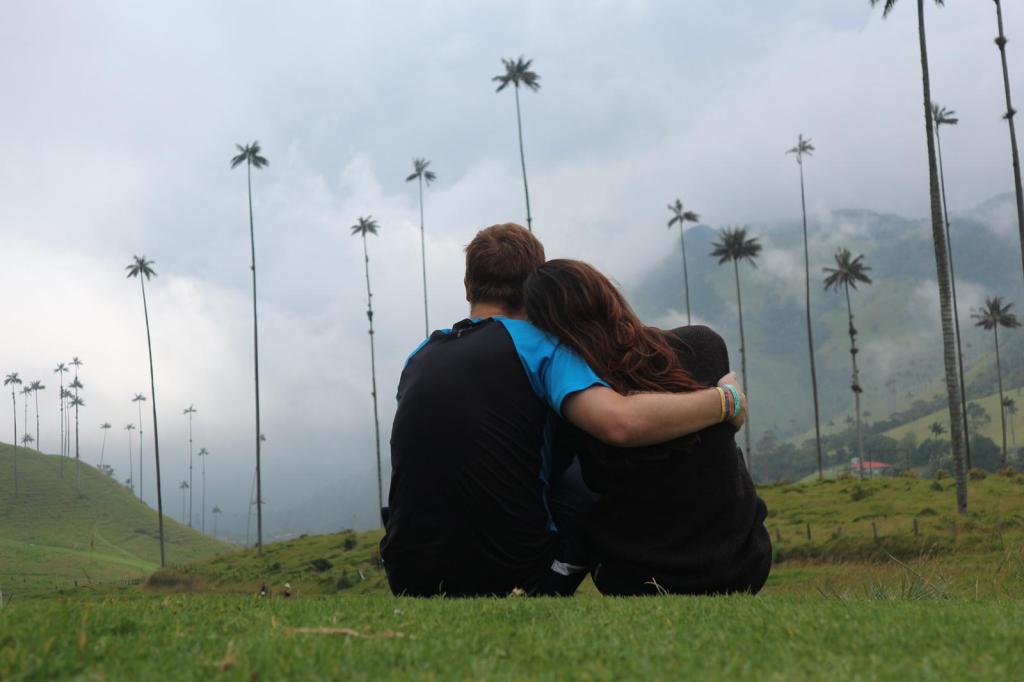
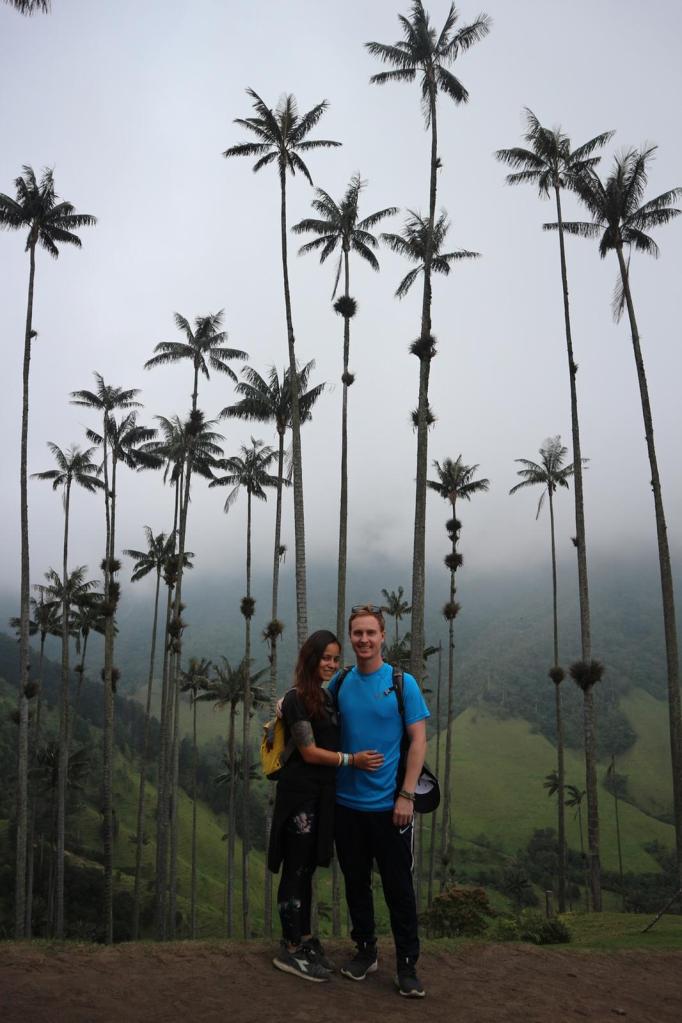
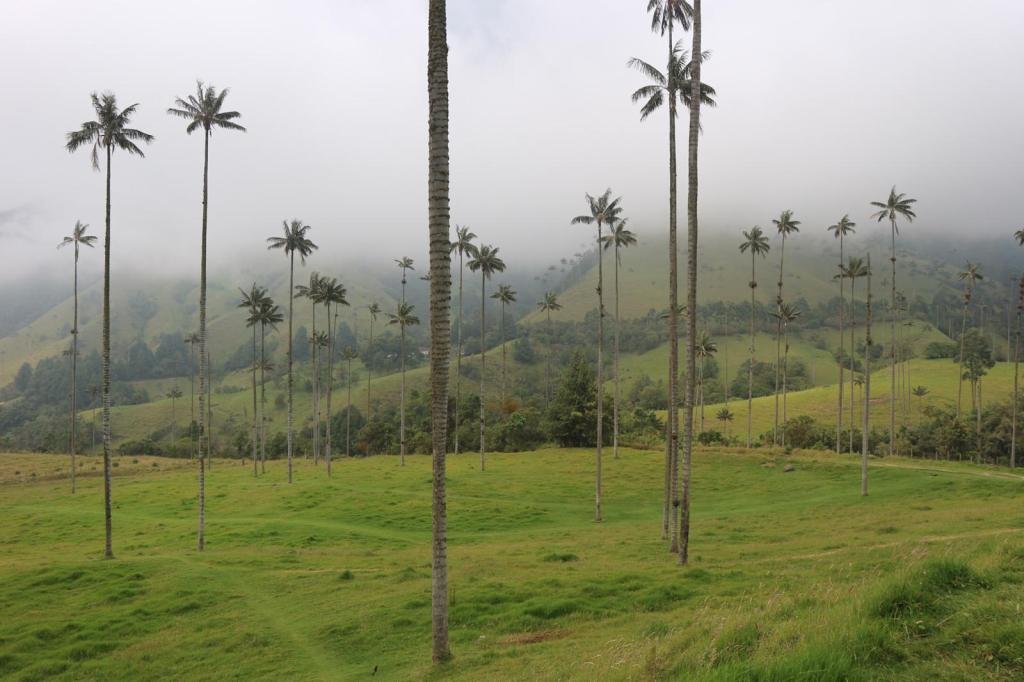
Aside from relaxing at the country-house drinking coconut water straight from coconuts, Juli, me, Charles and Jo took a day-trip to nearby Salento and Cocora Valley. Salento is a beautiful Colonial town with many photo and shopping opportunities, but the real aim was to visit the famous Cocora Valley. We took a two hour hike through one of the few places where Colombia’s national tree grows, the Quindio wax palm tree. These are palm tree sky-scrapers, 50-60 meters tall but super-skinny. Most are between 100-200 years old and make for an unbelievable landscape as the valley is almost always shrouded in mist – in Spanish it’s called ‘El bosque de la niebla’ – the fog forest. There used to be more of these trees but they were cut down for Palm Sunday celebrations, thankfully they’re now protected and the landscape is still astounding. We liked this place so much that Juli and I returned for a longer walk a few days later, even making it up to the Hummingbird sanctuary at the top of the valley!

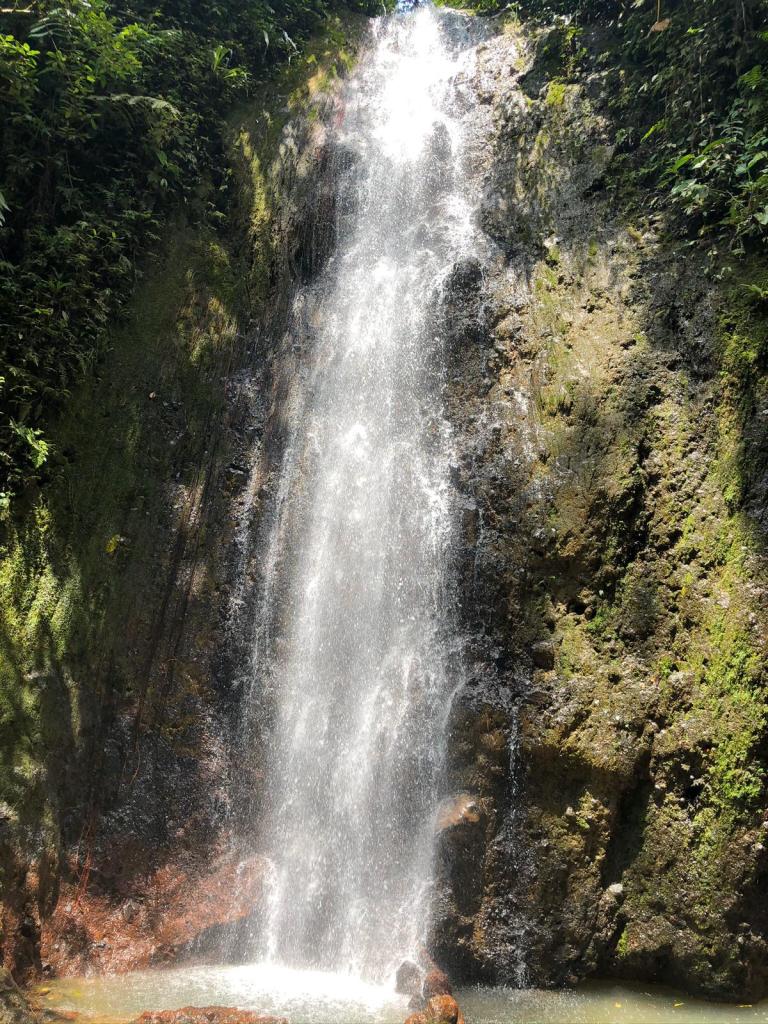
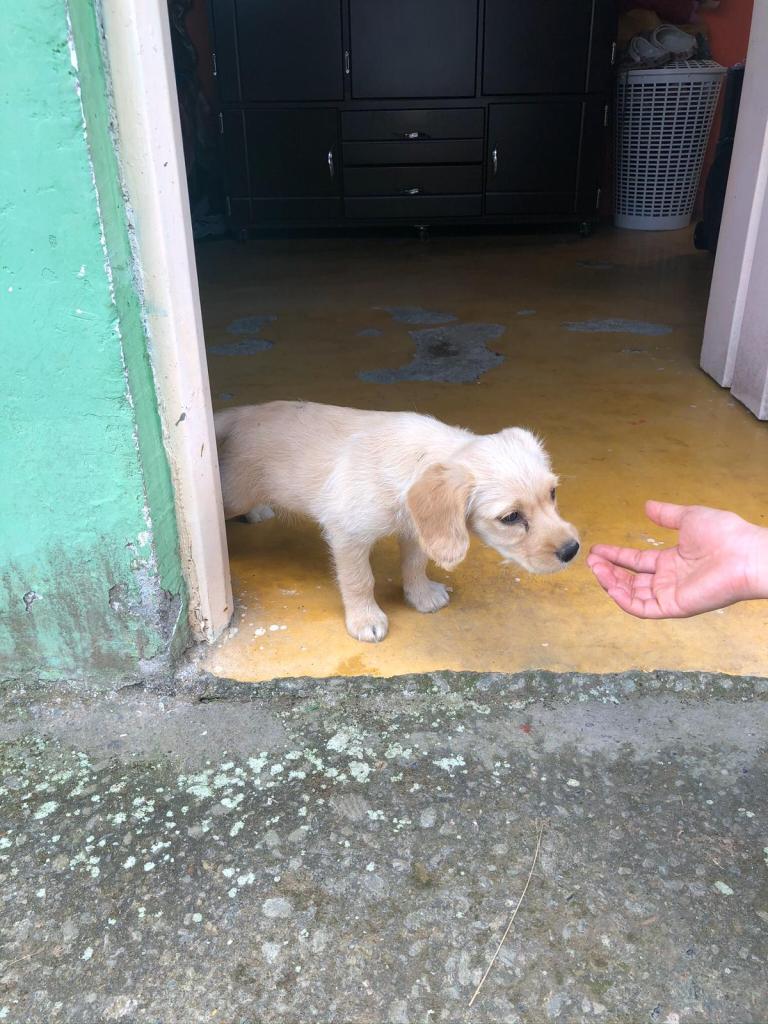
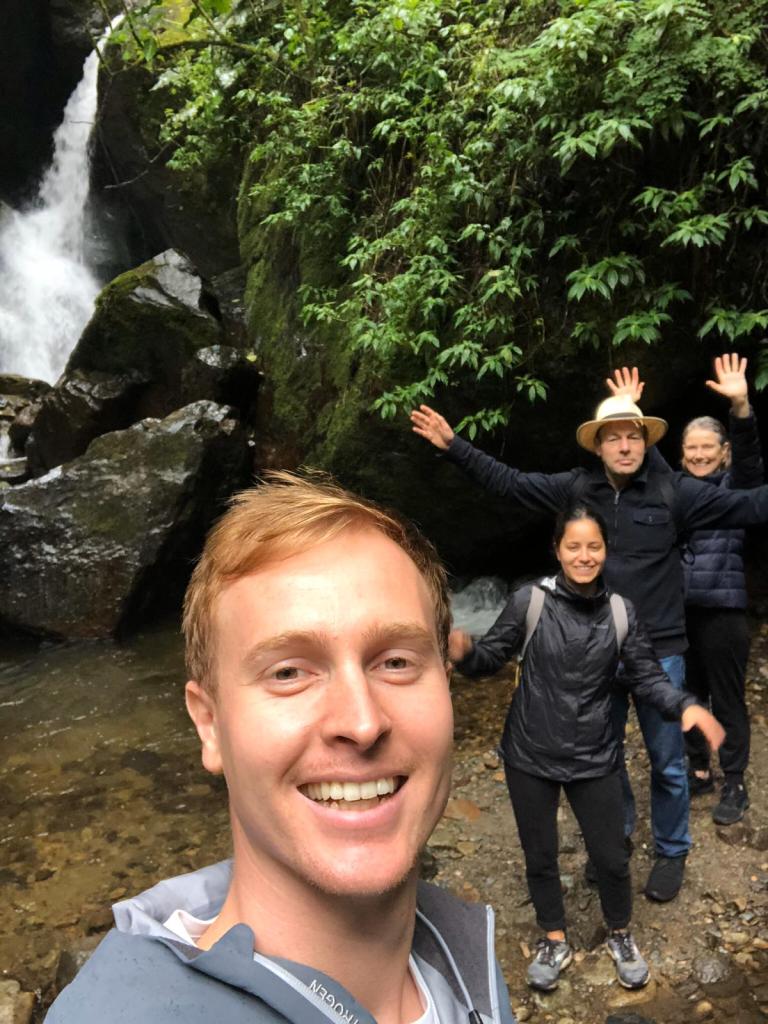
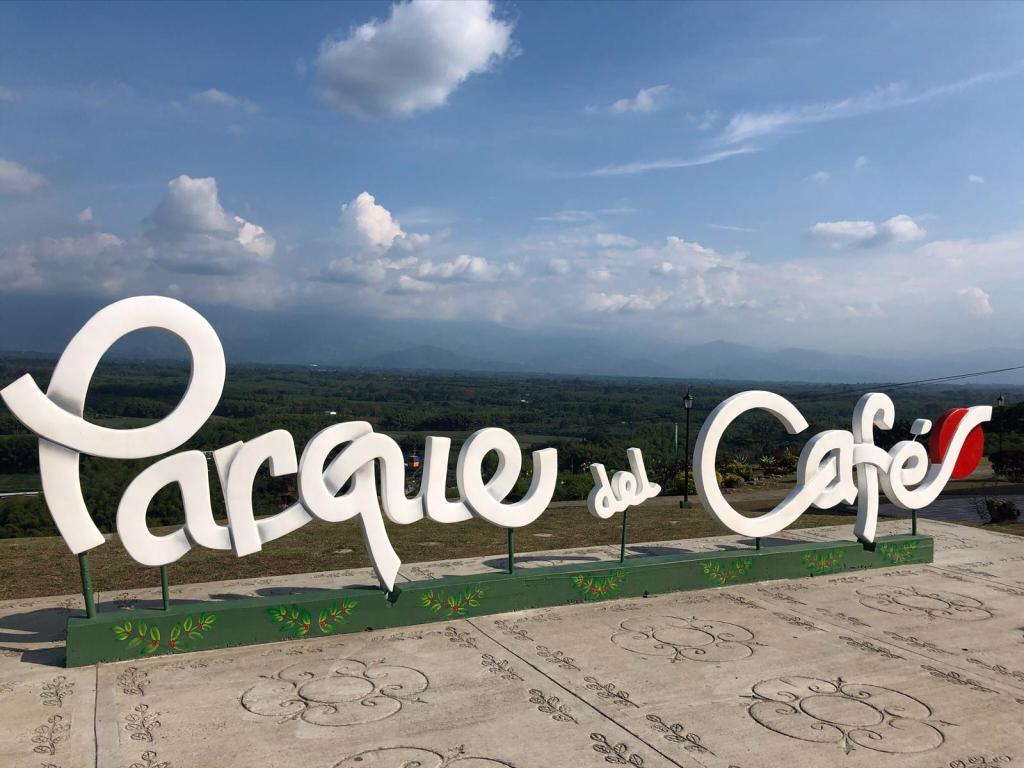
Before we left the big red country-house, we squeezed in a trip to the nearby ‘Parque del Café’, literally it’s a theme-park where all the rides are (somewhat tenuously) coffee themed. Juli and I spent the day being big kids going on all the roller-coasters and log-flumes, of course also having a coffee or two. Saying goodbye to Juli’s family, we then started our bus-hopping route back towards Medellin, passing through Montenegro and then stopping one night in the magically-named ‘Filandia’. This is another really beautiful Colonial town, slightly smaller and friendlier than Salento, famous for its views of rolling hills covered in coffee bushes. We also took a longer-than expected hike to two waterfalls, which we wouldn’t have found without Juli being able to speak to the locals en-route. On the way back we stopped for a drink at the house of the person who was nominally ‘organising’ entrance to the waterfalls and found such a cute little puppy!

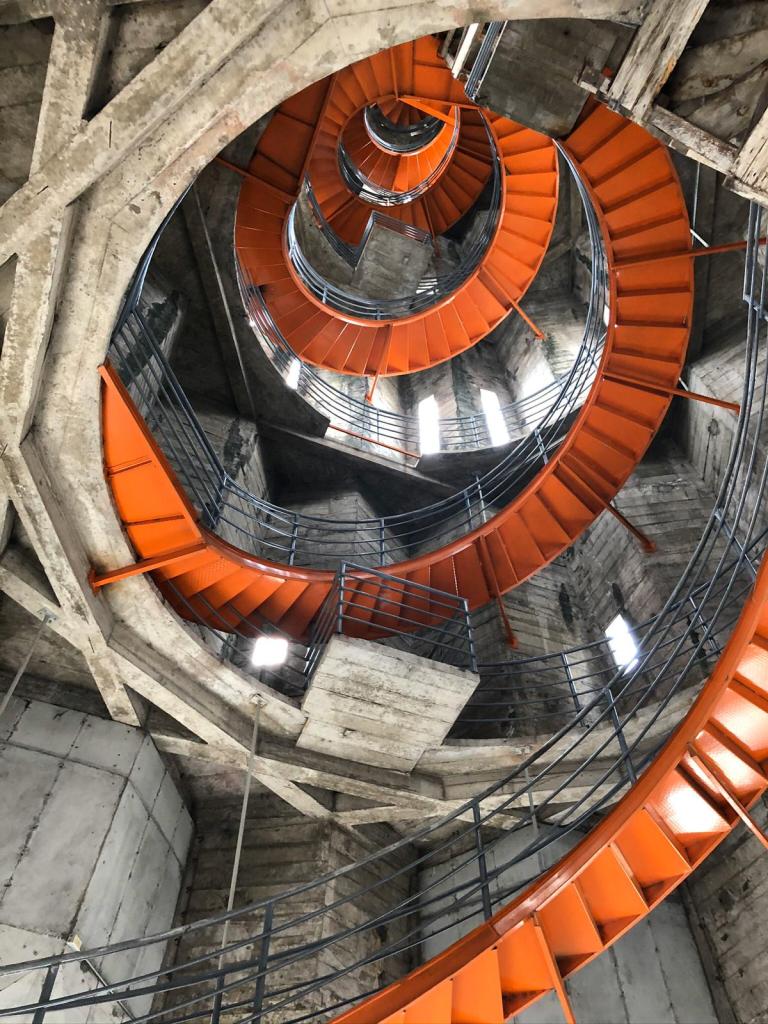
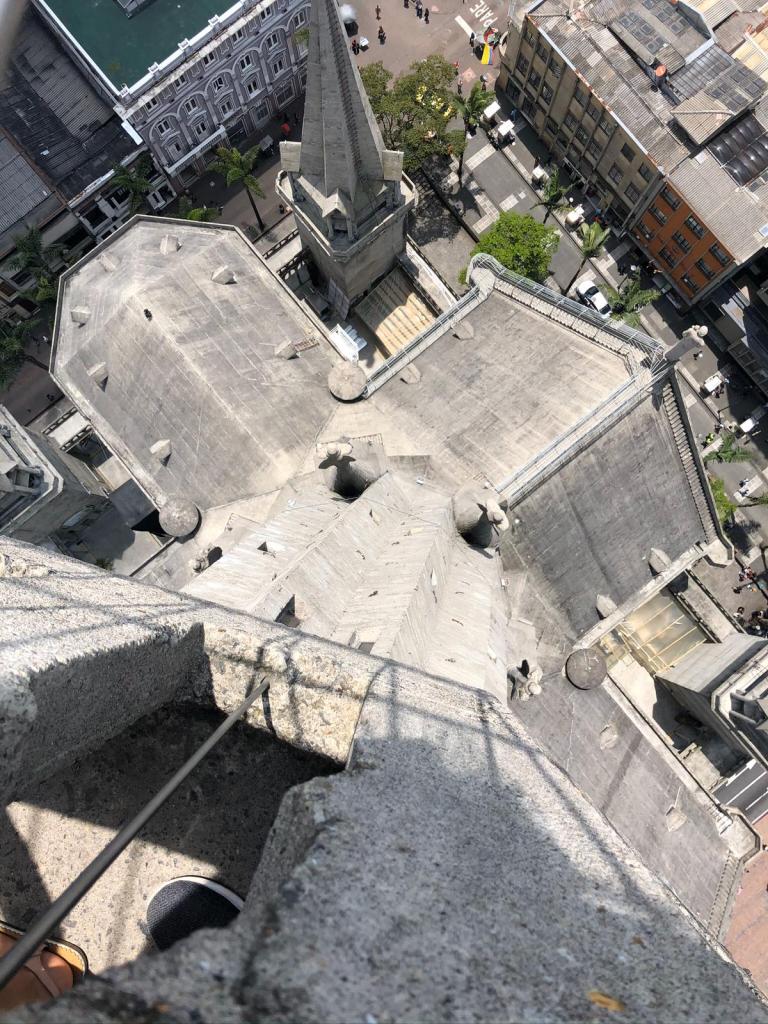
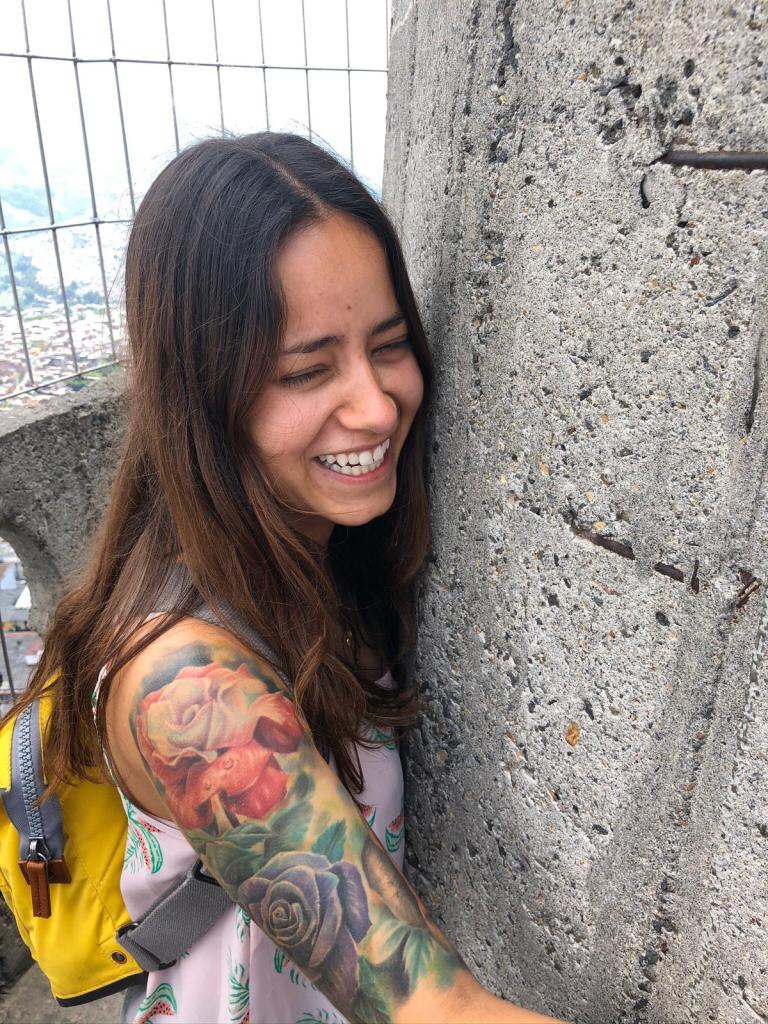
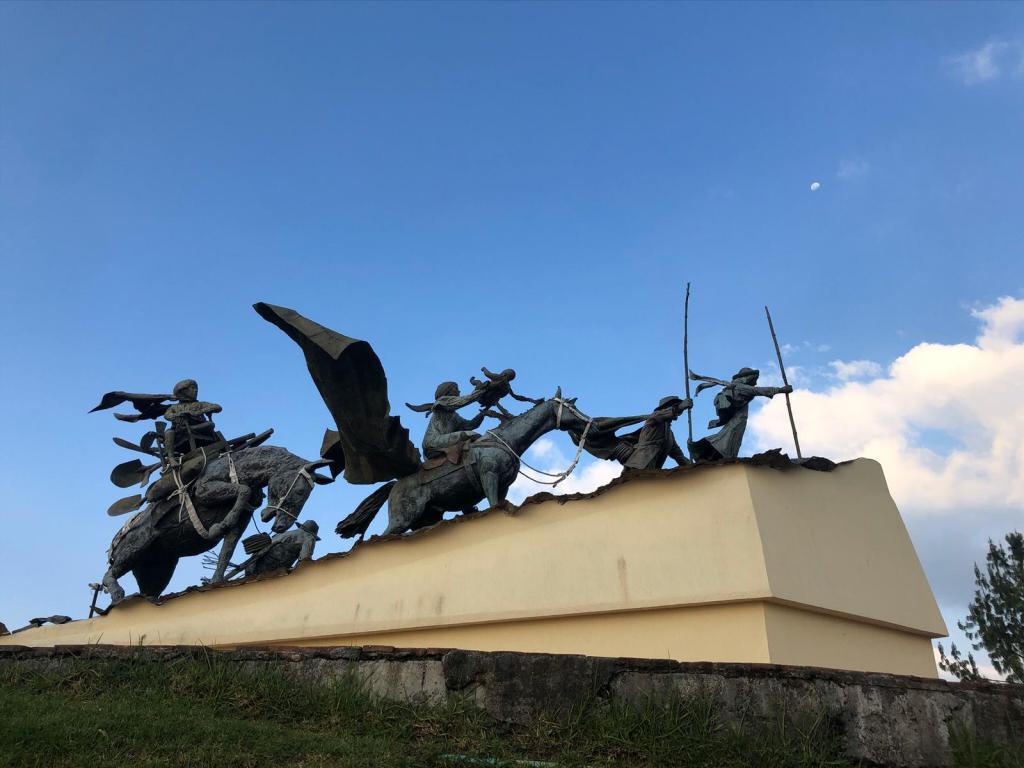
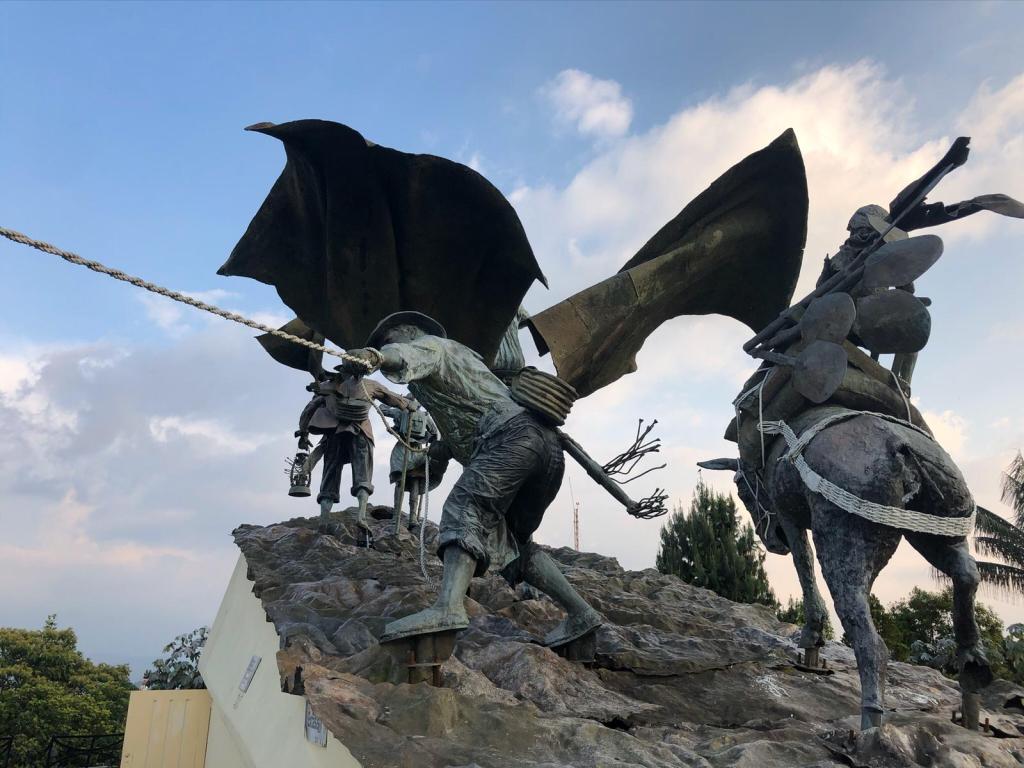
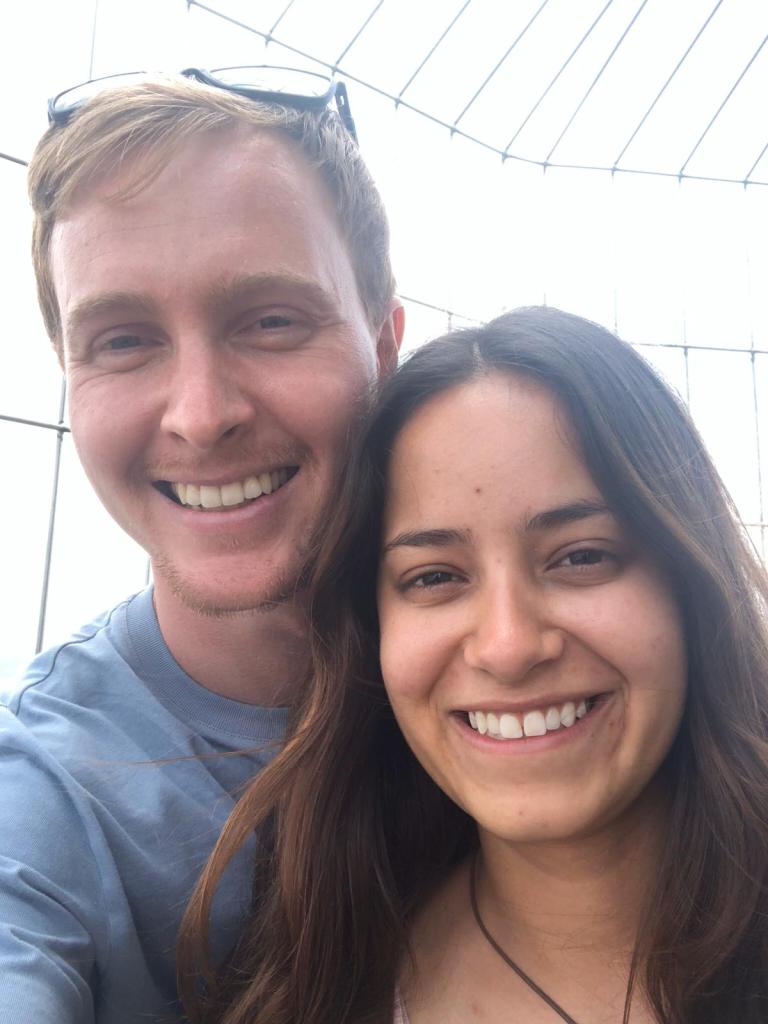
The next day we took a bus up to the bright lights of Manizales to stay with Juli’s mum’s cousin, Clara, for two nights. Manizales is a pretty big city which is built up one side of a mountain, so we definitely benefitted from the cable car system to move up and down the city. We spent a full day exploring, which included seeing a slightly confusing ‘Monument to the Colonisers’ – not sure anyone has really ever benefitted from colonisation but hey-ho, and the very impressive Manizales Cathedral. This has a spire of over 106m, the highest in Colombia, and also a ‘sky-walk’ where there’s a glass floor you can walk over and see worshipers far below. As you can see from the photos, Juli is not a fan of heights so this was a bit of a stressful tour for her 😀

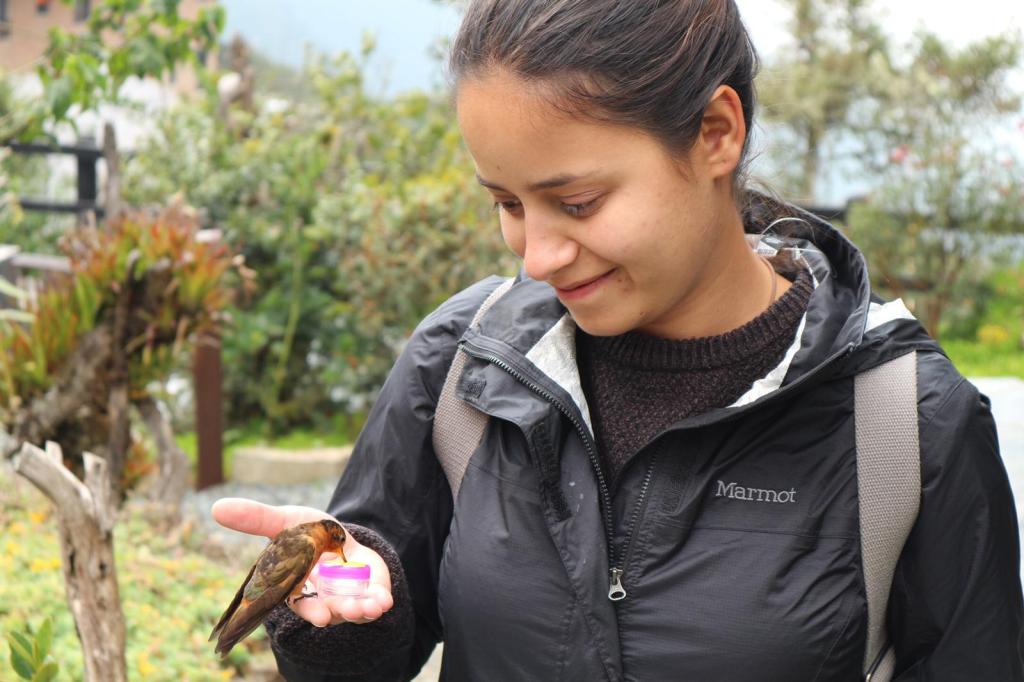
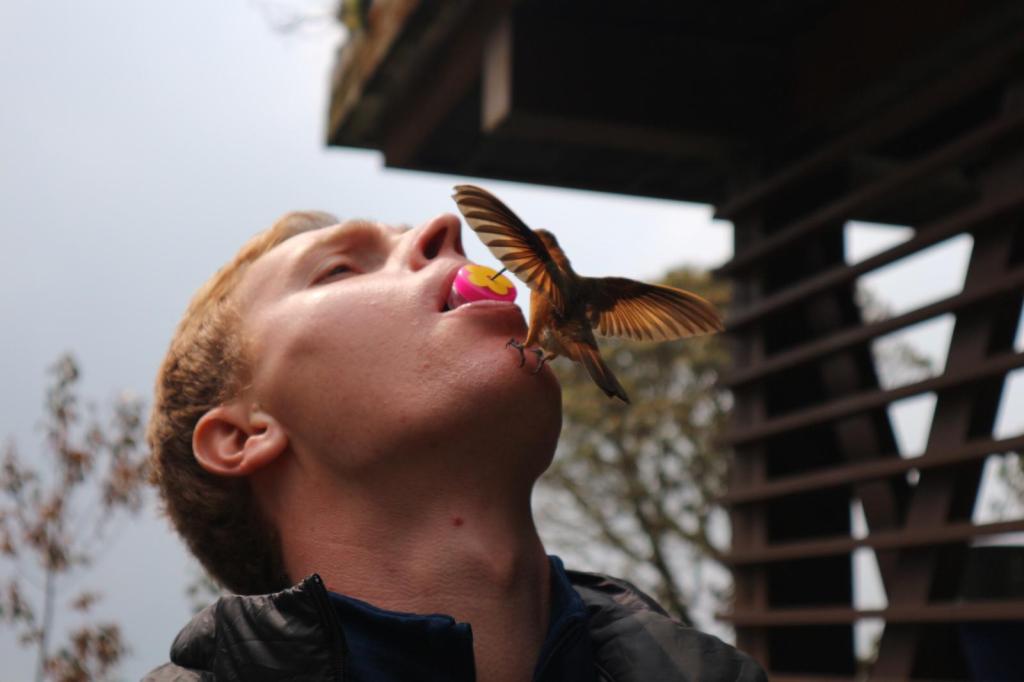
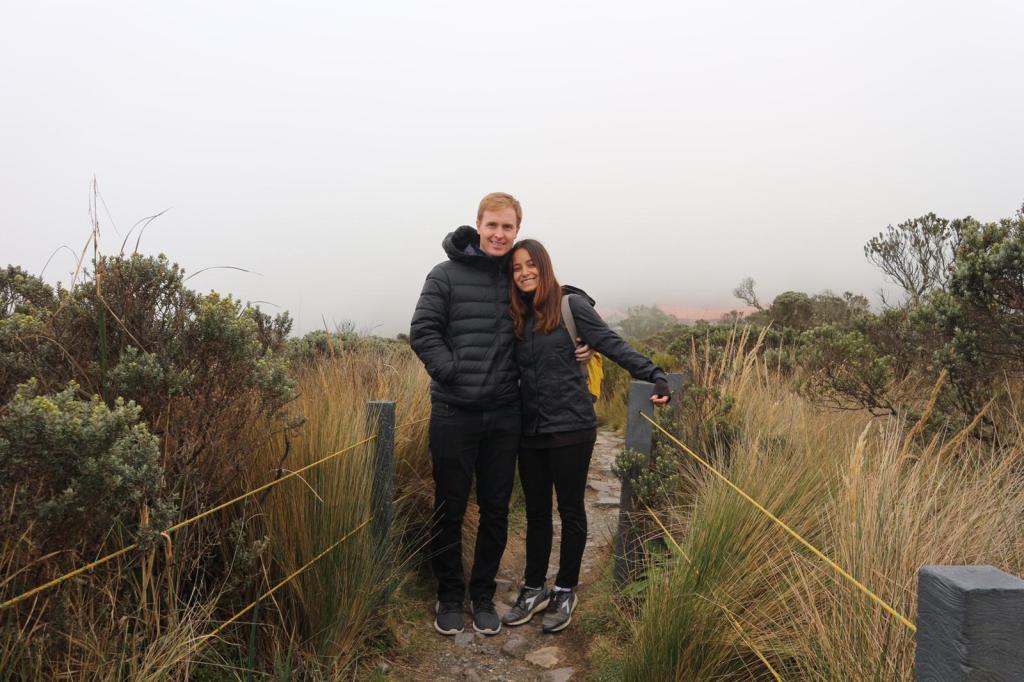
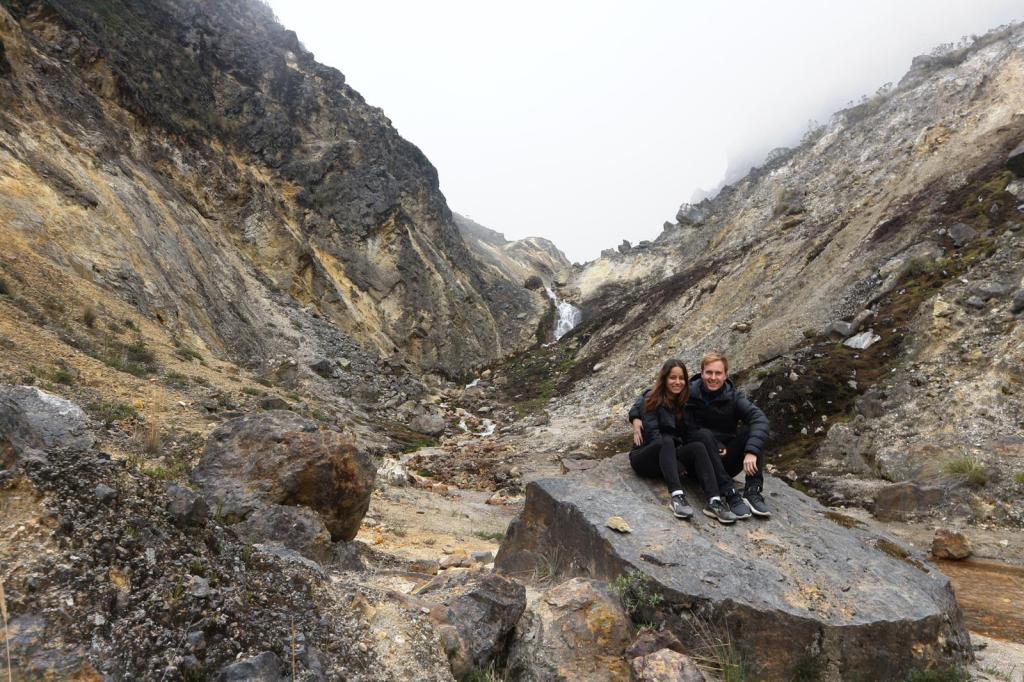
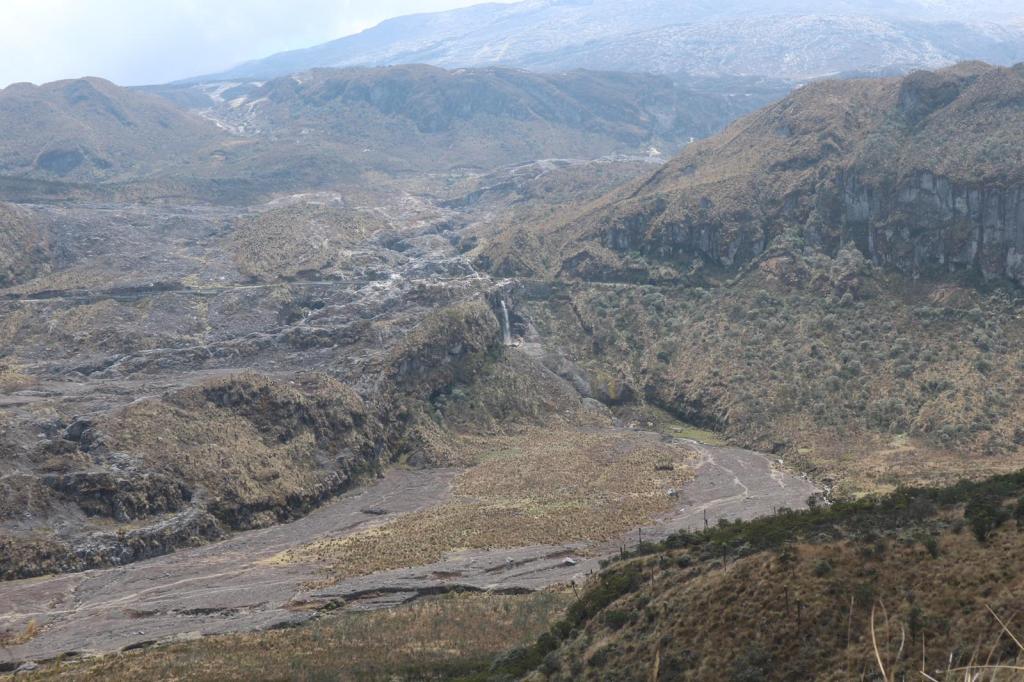
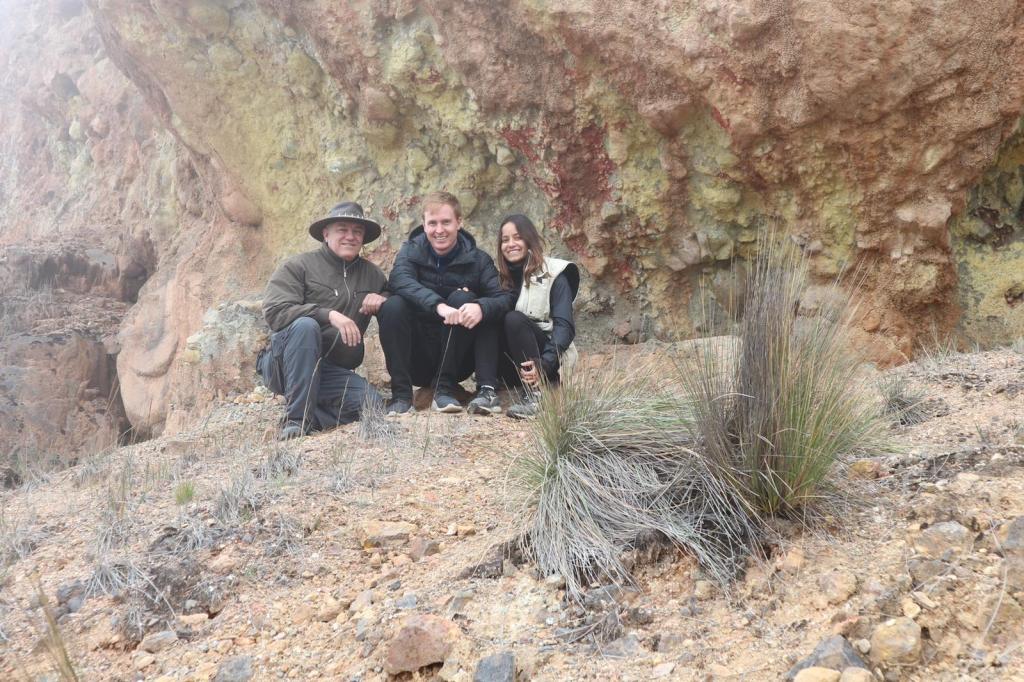
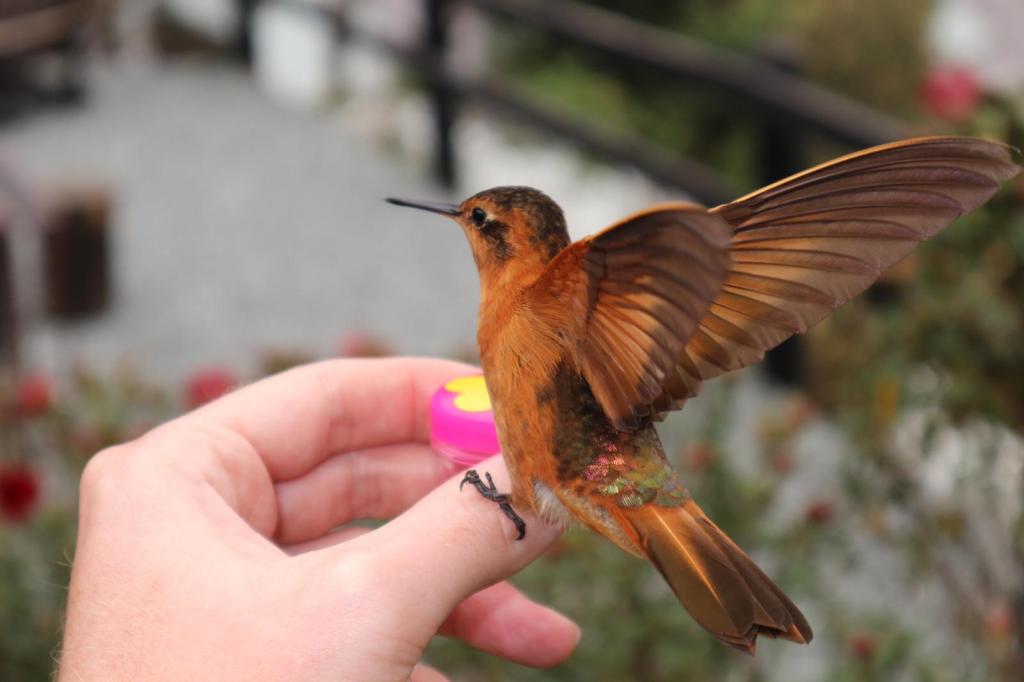
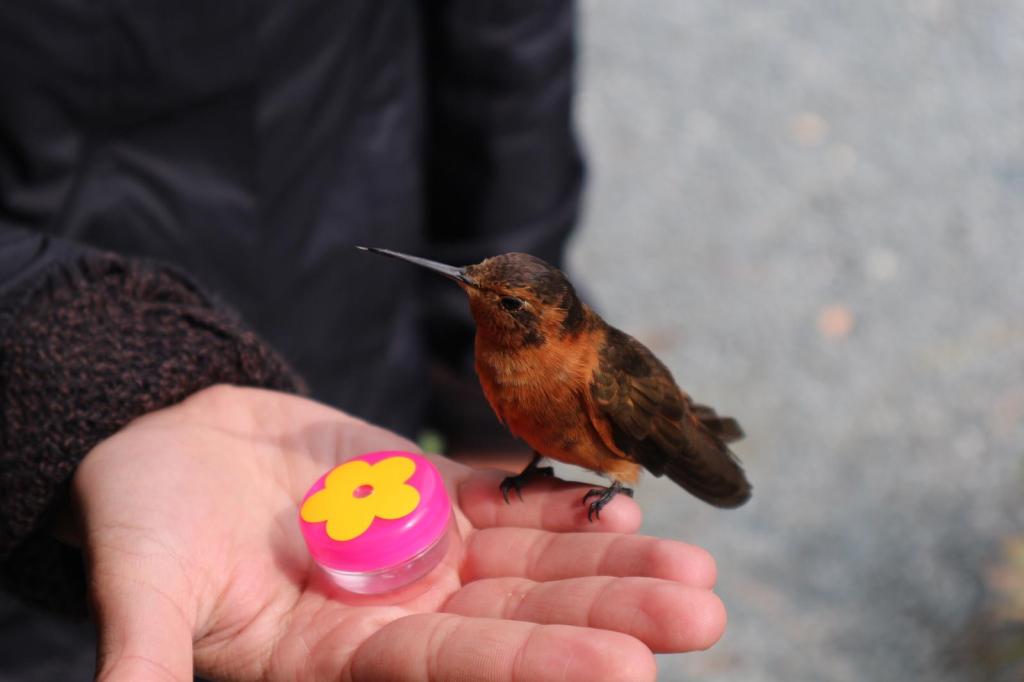
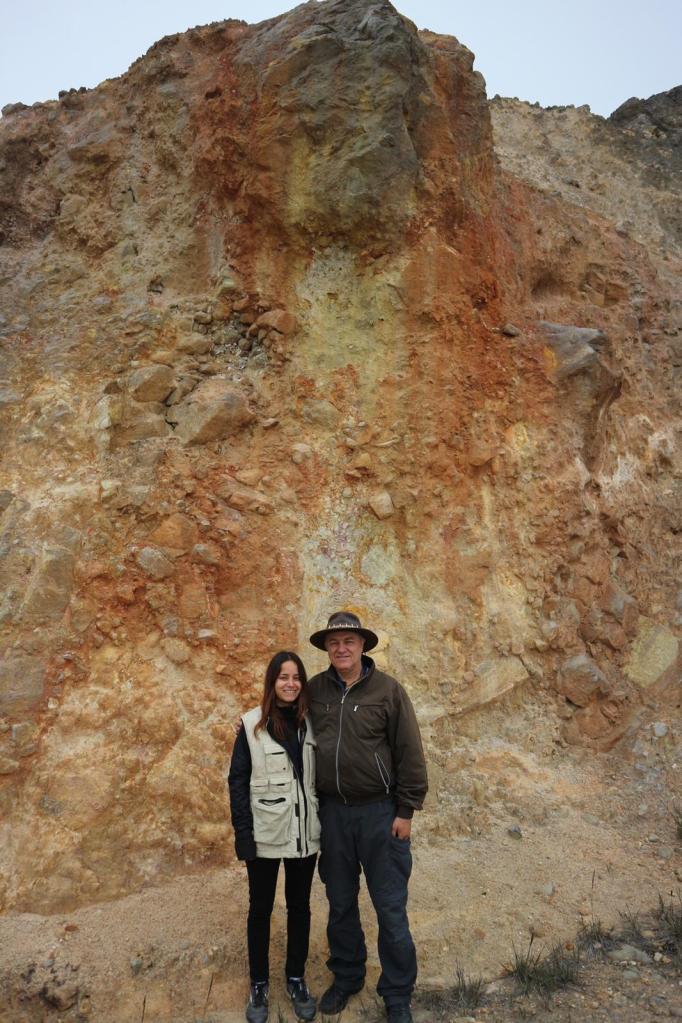
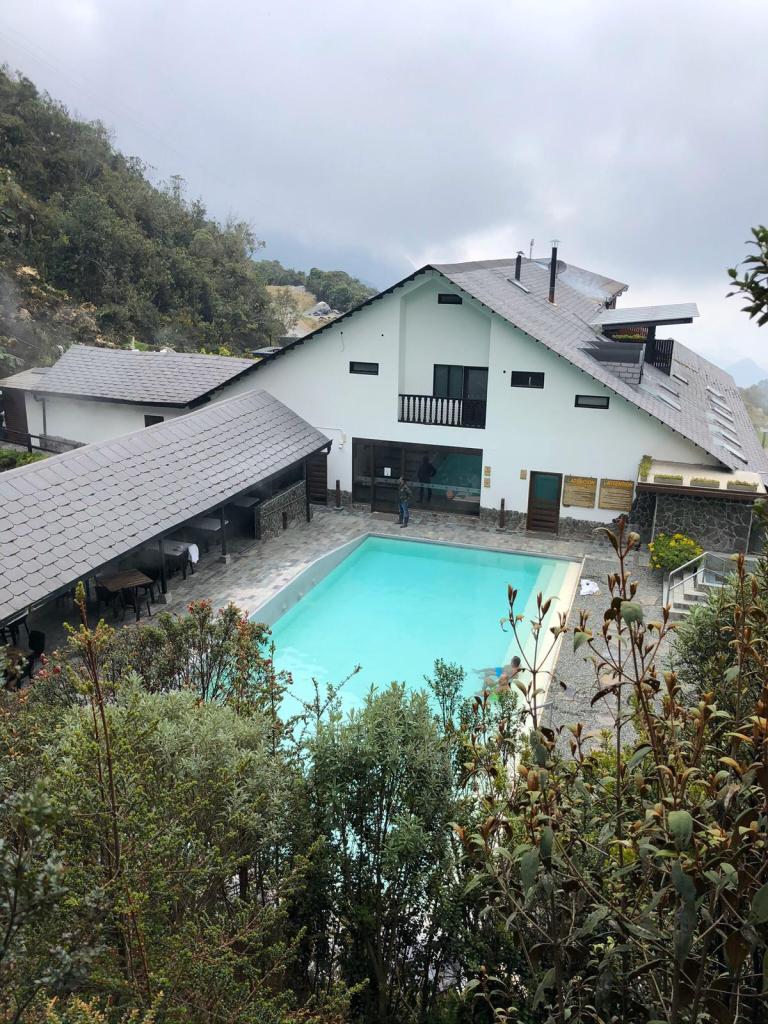
Our very last stop before getting our final bus back to Medellin on March 12th was with Juan-Carlos, another of Olga’s cousins. He is a surgeon and avid bird-watcher and has a second home on the outskirts of Manizales, where we would stay one night. He took us up into the nearby ‘Parque Los Nevados’, a national park where you can drive up to an altitude of 4,138m. What we didn’t realise was how awful a driver he was, speeding at break-neck speeds up very windy mountain roads. Stopping to see the rock formations was light-relief for me sitting in the back, although once we neared the top the roads deteriorated forcing a reduction in speed – thank god! Seriously though the views through the clouds and the high-altitude lakes were amazing to see, the scenery was quite moon-like. We then raced half-way back down the mountain for a late lunch at a hotel sitting next to thermal pools, it is also a well-known bird-watching spot. After the driving we really enjoyed relaxing in the thermals before having a truly unforgettable experience of photographing brilliantly coloured humming-birds. We were given little pots of sugar-water to encourage them to land on you, it was just fantastic.

Following this, we sped down the rest of the mountain, in the dark, to Juan-Carlos’ house. This was rather strange as although he had purchased it a while ago, he still hadn’t organised it at all for guests. For instance we had to stop at a nearby shop to purchase sheets, pillows and blankets for the bed we would sleep on. We don’t think it is visited very often, the house is covered in dust. Nevertheless we were grateful for the experience of the day and to arrive safely to the house. The next morning we took a 9 hour bus back to Medellin, little did we know how our world was about to change!

Next blog: our Coronavirus experience in Colombia

Playa Costeño & Cartagena

CORONAVIRUS UPDATE: Juli and I are both safe and healthy and are locked down in the country house near to Medellin (see blog 1 for pics). The whole of Colombia is under quarantine until April 13, although this may be extended. As things stand Colombia and South America in general appear to not be as badly affected as Europe so we are hoping we will still be able to travel at some point within the next few months, but who really knows… In the meantime we are continuing with writing up our trips which happened before the lockdown began! Will provide further coronavirus updates in future blogs. Stay safe all xx

Playa Costeño

Following a great couple of days in Minca, we took the crowded commuter bus up the coast to a hostel called ‘Los Hermanos’ (The Brothers) on Playa Costeño, not far from the town of Palomino. The hour’s bus journey included a man travelling with a rather grumpy chicken which he just held in his hands and a small child vomiting on my bag – we were happy when we arrived. Our hostel was located on a beautiful, unspoilt section of coastline, the kind of place where the only shade is from palm trees and there are no beach vendors at all. The sea was really rough so you could only paddle but we were very happy to have the opportunity to do some more relaxing on the sand. I was wondering when I might get my first sun burn of the trip and I was caught out here following a haphazard application of sun cream to the chest. For three days we settled into the hippie vibe, drinking beer and playing Uno and table tennis with other travellers – one evening we joined a salsa dancing class put on by the hostel which was entertaining for onlookers I’m sure. The most active thing we did was tubing down a nearby river with a group of others, literally it’s just sitting in car tyre inner tube and floating down the river with a beer. We don’t have any photos of that due to the water but it was great fun and included a few small rapids, a cliff jump and rope swing (all very safe don’t worry mum).

Keen to see as many of the best beaches in Colombia as possible, we bought bus tickets from Santa Marta to Cartagena, the most well-known city on the Caribbean coast and a place we both love. After about a 4.5 hour journey back west along some spectacular stretches of coastline, we found ourselves in a great apartment on the fourth floor of a new high-rise block looking right over the seafront to the north of Cartagena’s old town –restoring our faith in Airbnb. Unfortunately Juli picked up a bug somewhere and was not well our first night and day, so we chilled in the apartment before heading down to watch the sunset from the pool the following evening. The next day Juli was feeling a bit better so we spent much of it on one of Cartagena’s famous beaches – they are enormous and the water is beautifully warm. In the evening we met up with Juli’s former boss from her architectural firm in London, Charles, who happened to be travelling to Colombia with his wife Joanna. Cartagena’s colonial old town is beautifully maintained and has an amazing energy and charm to it. Tiny streets are lined with tall, vibrant pastel-coloured buildings many of which have small wooden balconies draped with flowers overlooking the bustle of people below. Honestly if you haven’t been put it on your bucket list, we couldn’t recommend it highly enough. After wandering around we ducked into one of these bright buildings for dinner and enjoyed traditional Colombian food like Ajiaco and Sancocho (meat and potato soups) plus some great seafood. We were also treated to live traditional ‘Cumbia’ music and a dance performance from two amazing dancers in the restaurant! Later on we took a walk on top of the huge walls which surround the city, built to protect Cartagena from 16th century pirates following a successful assault by Sir Francis Drake – us Brits eh?

We flew back down to Medellin the next day and before our next trip to the region of Armenia (next blog), we met up with Charles and Joanna again for a day trip to see ‘La Piedra de El Peñol’. This is an enormous rock overlooking a vast reservoir which was created in the 1970s when a dam was built, flooding the town of Peñol! It is really spectacular and we climbed up the more than 700 stairs built into the side of the rock to reach the viewing platform at the top. We also had lunch in the nearby town of Guatapé, another lovely little colonial village famous for its colourful fresco-like panels adorning the lower parts of the houses. The pictures of these and from El Peñol tell a thousand words, so I’ll stop here!

Next blog: Armenia, the coffee growing region

Santa Marta & Minca

To give everyone a break from hosting us in Medellin we headed off for a two week trip to the Colombia’s Caribbean coast. Juli has travelled in this area before, but only for short periods, and after a couple of weeks of learning Spanish grammar I was keen to practice/escape. Suffice to say we were both excited to board our flight on 9th February from Medellin to our first stop, Santa Marta.

Arriving at our Airbnb just south of Santa Marta itself, our first impression was the wind! We just happened to visit during the windiest time of the year in Santa Marta and it had recently blown out one of the big glass panels in the reception area of the building in which we were staying, which had been replaced with slightly dodgy metal mesh. This was a sign of things to come. We made our way past the ‘sales office’ where the computers were covered in plastic sheeting and up onto the 9th floor to find our apartment. Our corridor had a sort of apocalyptic feel given it ended with a short hop onto the roof of a very much unfinished adjoining block, and there weren’t any hand-rails or walls in the staircase. The apartment itself was nice and had an excellent view of the beach, but we would discover over the coming days the block was very unfinished and was pretty much abandoned – there was even still a massive crane in the pool which had been left to swing around in the wind! The photos give you an idea… At night the wind howling through empty floors was slightly disconcerting, but we didn’t let this prevent us from enjoying ourselves.

We spent three days relaxing on the beach, eating seafood for lunch and watching the sunsets, before deciding to bail out a day early to squeeze in a trip to Minca, a 45 minute drive up into the hills above Santa Marta. 3 stars – we will try not to be catfished by Airbnb again!

We only passed through Santa Marta itself as there isn’t a huge amount there for tourists and lacks a bit of the charm and wealth of nearby Cartagena, most people stay at nearby beaches as we did. The city centre is mayhem with really densely packed shop fronts, street vendors and lines of stationary traffic. We changed buses and hustled through the chaos with our huge backpacks and were happy when we’d made it out of the intense heat onto the bus.

Minca is a small hill-top town in the Sierra Nevada mountain range and has become a chilled out place for backpackers to stay and explore the surrounding jungle. We stopped two nights in this amazing hostel which was a nice change from Santa Marta… Our accommodation was a little hut made from bamboo sitting up on stilts and it had an fantastic balcony with views back down to the coast. Aside from relaxing in hammocks, drinking coffee on the balcony and chatting with our American neighbours, we undertook our first two hikes of the trip to two nearby waterfalls, first to Pozo Azul and then the next day to the more well-known Marinka waterfall. Both were impressive and you are able to swim in both, which we did as the water was not too cold, but we preferred Pozo Azul as it’s a series of smaller waterfalls with fewer people and lots of brightly coloured birds to spot in the trees. In Minca itself we ate twice at the number one restaurant on TripAdvisor which was a really good Italian. The second time this proved to be a particularly good decision as there was a power cut in the town and this was one of the few restaurants with its own generator – making for a more romantic Valentine’s day! Slowly others wandered into this lighthouse and we chatted to a couple from the UK whilst sipping one of Colombia’s only pale ales brewed by the Cerveceria Nevada located just outside of Minca – just edging out Juli as the best thing about the evening… just kidding 😉 The next day we headed back down to Santa Marta so we could catch the bus further up the coast to Playa Costena, the subject of our next blog!

Next blog: Playa Costeno and Cartagena

Santa Fe de Antioquia

Santa Fe de Antioquia, main square

After 10 days of exhausting unemployment in Medellin we thought we could use a mini-break. So on 1-2 Feb we decided to take a trip to Santa Fe de Antioquia with Juli’s mum Olga and best-friend Paula and her boyfriend Danny. Santa Fe is about a 1hr30min drive to the north-west of Medellin, on some very twisty roads. Along the way I experienced my first police checkpoint which meant showing IDs and a frisk (men only), but it was very relaxed and is common when driving between cities. Over the drive we dropped from 1,500m in Medellin to 500m above sea level in Santa Fe, which makes the latter boiling hot and humid all year round. Our Airbnb was in an enormous holiday home complex which had eight swimming pools so we spent most of the weekend trying to figure out which one we liked the most!

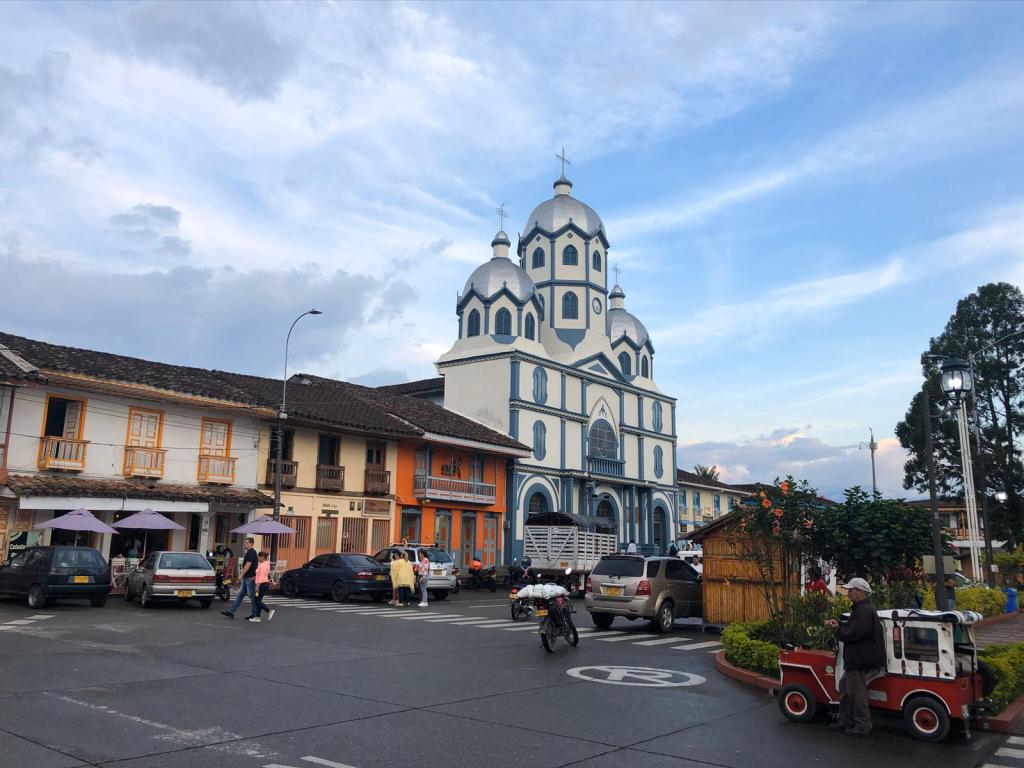
Santa Fe itself is a lovely old colonial town and contains what I’m discovering is the typical look of colonial towns in Colombia – a big square with a small park in the middle and a church at one end. Some can be a little rough around the edges but this one is really well maintained and the surrounding buildings are full of nice cafes and heladerías (ice cream parlours) which you can enjoy from little balconies upstairs. In the pictures you may also notice us sporting some rather nice traditional sombreros, courtesy of the square’s market stalls.

Santa Fe

On the way back to Medellin we stopped by an impressively old wooden suspension bridge, Puente de Occidente, which was built in the 1890s – Wikipedia tells me when it was built it was the third largest suspension bridge in the world. Only small vehicles and pedestrians can cross and it trembles and creaks when a motorbike trundles past. But, luckily we survived our crossing to make it to the other side and lunch! 

Puente de Occidente

Next blog: our trip to the Caribbean coast

Create your own website, free on WordPress.com.Create your own website.
Start free